Induction melting aluminum applications are revolutionizing how industries harness this versatile metal. Aluminum is vital in modern manufacturing thanks to its light weight, strength, strong conductivity, and corrosion resistance.
But there’s a twist—melting approaches aren’t equivalent. The initial melting process determines whether aluminum reaches its full potential or loses its prized properties.
So what’s the solution for high-performance applications? Induction melting stands out by using electromagnetic fields. It heats aluminum directly from within—no contact, no contamination. Just precise, efficient heating. This smart approach solves the limitations of traditional melting while unlocking new possibilities.
In this post, we’ll explore why induction melting is becoming the gold standard. We’ll also reveal five critical applications—where it’s not just better, it’s essential. From aerospace to cutting-edge electronics, discover where this technology makes all the difference.
Key Advantages of Induction Melting Aluminum
So, what makes induction melting the go-to choice for high-performance aluminum? The key lies in three unique benefits no other method offers.
1. Unmatched Temperature Precision (±5°C)
First, it delivers incredible temperature precision (±5°C). Induction heating works by generating heat directly inside the aluminum using electromagnetic fields. This direct, rapid heating means we can control the temperature with laser-like accuracy.
Why does this matter so much for aluminum alloys? Getting the temperature wrong—even slightly—can cause serious issues. This includes “overburn,” which weakens the alloy’s structure, or “segregation,” where alloy elements clump unevenly. Induction melting eliminates these risks completely. The result? Consistent, high-quality metal, batch after batch.
2. Built-In Electromagnetic Stirring
Then, there’s the built-in super stirrer: electromagnetic stirring. As the induction fields heat the metal, they also create powerful, natural stirring forces within the molten aluminum. This isn’t an add-on; it’s automatic!
This intense, self-stirring action mixes everything—base metal, alloying elements, and grain refiners—thoroughly and evenly throughout the melt. No more hotspots or weak spots.
You get perfectly uniform composition and microstructure. For creating high-performance aluminum alloys where every tiny detail counts, this level of uniformity isn’t just nice; it’s absolutely essential.
3. Ultra-Low Oxidation Losses (<1%)
Finally, induction melting slashes oxidation losses to less than 1%. How? Because it happens inside a tightly sealed chamber, flooded with protective inert gases like argon.
Compare this to traditional gas furnaces, where molten aluminum is exposed to air, leading to significant oxidation losses—often 3% or much higher. That lost metal literally turns into useless dross.
The ultra-low loss with induction melting means three big wins: You save money by losing far less valuable material. The melt stays incredibly pure, with far fewer oxide impurities that can weaken the final product. You get a much higher yield of usable metal. Better purity, less waste, more profit.
Learn more about the advantages of induction melting furnaces.
These three pillars—precision, uniformity, and purity—unlock aluminum’s superstar qualities: lightweight, conductive, and corrosion-resistant. Induction melting uniquely preserves and enhances these properties. Here’s exactly how:
Why Aluminum Needs Induction Melting
Aluminum is a true engineering marvel. Aluminum’s innate qualities make it irreplaceable. It’s incredibly lightweight, an excellent conductor of heat and electricity, and highly resistant to corrosion.
To truly harness these superpowers in demanding applications, we need more than just a melting process. We need one that actively protects and enhances aluminum’s innate qualities. That’s precisely where induction melting shines.
Think of induction melting as aluminum’s perfect partner. Here’s how it maximizes those critical properties:
Ultra-High Purity = Peak Performance:
Melting sealed inside an inert gas atmosphere (like argon) is a game-changer. It blocks oxygen completely, stopping damaging oxidation. Plus, there’s zero risk of contamination from fuel residues (like you get with gas or oil furnaces).
The result? Exceptionally clean metal with impurity levels kept ultra-low. This pristine purity is vital for top-tier electrical conductivity, corrosion resistance, and overall material integrity. Dirty metal simply can’t perform at its best.
Flawless Metallurgical Quality:
Remember that pinpoint temperature control (±5°C) and powerful electromagnetic stirring? They team up here. Precise heat management prevents damaging the aluminum’s structure.
Simultaneously, the intense, automatic stirring ensures every drop of the melt—alloying elements, grain refiners—is perfectly mixed. This dynamic duo guarantees a dense, uniform microstructure. You get metal free from hidden enemies like gas bubbles (porosity), unwanted inclusions, or weak spots that lurk in poorly melted batches. Strong, reliable metal starts here.
Identical Performance:
That perfect mixing and temperature control deliver more than just one good melt. They ensure every single batch has the exact same chemical composition and crystal structure.
This translates directly to highly predictable and stable mechanical properties. Need consistent strength, toughness, and durability across thousands of parts? Induction melting delivers that reliability. No nasty surprises in performance testing.
Boosting Efficiency:
Losing less than 1% of your aluminum to oxidation isn’t just a technical win—it’s a major efficiency boost. Traditional melting can see 3% or more vanish as worthless dross.
Induction melting keeps that valuable metal in the melt pool, significantly boosting your usable yield. More material turns into high-quality product, improving your bottom line and resource efficiency. You buy aluminum to use it, not burn it away. So, induction melting doesn’t just melt aluminum; it unlocks its full genetic potential. It delivers cleaner, stronger, more consistent metal, with less waste.
This powerful combination is why induction melting isn’t just good—it’s become absolutely essential in the most demanding fields. Ready to see where these advantages make all the difference?
Let’s explore five key industrial applications for aluminum. Here, induction melting isn’t just the best choice—it’s often the only way to meet performance and reliability demands. From soaring jets to the chips powering your phone, these are the frontiers where aluminum truly shines.
Learn more about advantages of induction melting furnaces.
Five Key Industrial Applications of Induction Melting Aluminum
While induction melting offers clear advantages for many aluminum processes, its unique combination of capabilities makes it absolutely essential in certain high-stakes industries. These sectors demand performance levels that simply cannot be reliably achieved with traditional melting methods.
Let’s explore the first critical application where induction melting isn’t just preferred—it’s fundamentally required.
Application 1: Aerospace Critical Components
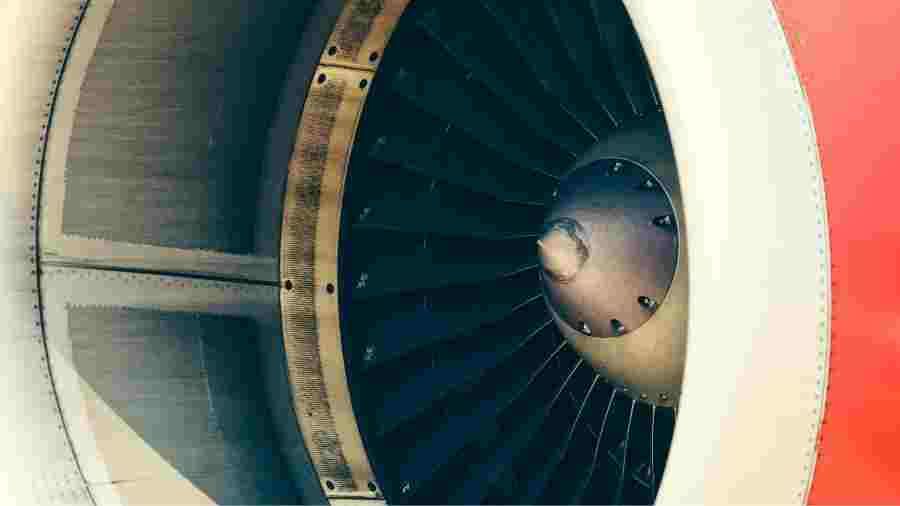
Think airplane frames, wing spars, rocket fuel tanks, jet engine compressor parts, landing gear cores, and satellite structures. These components face the most extreme demands.
The Requirements Are Extreme:
- Every gram counts: Massive effort goes into reducing weight for better efficiency and range.
- Strength is non-negotiable: Parts MUST withstand huge forces, vibrations, and pressures without failing.
- Fatigue life is critical: Components endure constant stress cycles and MUST resist cracking over time.
- Reliability is paramount: Failure can be catastrophic. Parts perform flawlessly in harsh conditions like intense cold, heat, vacuum, or corrosive environments.
- Consistency is key: Every single component MUST meet the exact same high-performance standard, batch after batch.
Why ONLY Induction Melting Works Here:
Traditional melting methods struggle to hit these stringent targets consistently. Three critical induction melting benefits meet aerospace’s exacting standards.
Firstly, precision temperature control (±5°C) is vital. High-strength aerospace alloys (like 7075 or 2024) are sensitive. Even slight overheating (“overburning”) during melting weakens them permanently. Induction’s rapid, direct heating avoids this, keeping the alloy at its strongest.
Moreover, ultra-uniform composition is mandatory. The powerful electromagnetic stirring is a natural part of induction melting. It ensures every alloying element disperses evenly. Grain refiners also spread perfectly throughout the molten aluminum.
This eliminates weak spots, hidden flaws, or uneven properties (“anisotropy”) that could cause unpredictable failure under stress. The material behaves consistently in all directions.
Crucially, minimal oxidation (<1%) under inert gas guarantees exceptional purity. Traditional open-flame melting loses more metal to oxidation and introduces harmful oxide particles.
These tiny inclusions act like stress concentrators—prime locations where cracks can start, especially under fatigue loading. Induction’s clean melt environment virtually eliminates this risk, directly boosting part lifespan and reliability.
In aerospace, failure isn’t an option. Induction melting provides the critical trio: exact temperature regulation, flawless consistency, and unmatched purity. These qualities are critical for building components that perform consistently at the absolute limit.
Application 2: Premium Electric Vehicles
The race for longer range and superior performance defines the premium electric vehicle (EV) segment. These cutting-edge cars need advanced aluminum components pushing the limits of efficiency and durability.
Induction melting becomes a critical enabler here, directly impacting real-world EV capabilities consumers demand.
Meeting EV-Specific Challenges:
- Maximizing Range: Every bit of energy efficiency counts. Less vehicle weight means more miles per charge.
- Ensuring Safety: Components like battery housings and structural frames must absorb crash forces reliably to protect the battery pack.
- Supporting Fast Charging: High-power charging cycles generate significant heat; materials need superior thermal performance.
- Providing Premium Feel: Consistent material properties allow for precise engineering and long-term quietness/rattling prevention.
- Offering Extended Warranties: Parts must last longer than traditional vehicles, requiring exceptional fatigue resistance.
Why ONLY Induction Melting Works Here:
Premium EVs benefit uniquely from induction melting’s precision and consistency.
Primarily, consistent alloy properties batch-to-batch (±5°C control) are non-negotiable. Components like high-voltage battery housings and integrated drive units use specific alloys (e.g., 5xxx or 6xxx series).
Stable melting prevents variation. This consistency ensures every part meets strict crash-test standards and functions reliably for the vehicle’s extended life.
Moreover, low oxide inclusion levels lead directly to superior fatigue strength. Modern EVs use large, complex structural castings within their chassis. These parts endure constant road vibrations for hundreds of thousands of miles.
Fewer oxide impurities prevent early micro-crack formation. Ultimately, this keeps the vehicle structure quieter and fundamentally stronger over time, supporting those lengthy warranties.
Crucially, improved fluidity allows manufacturers to create intricate thin-walled structures. Induction melting maintains extremely stable aluminum chemistry.
This precise control is vital for casting the complex geometries needed for lightweight battery enclosures and efficient thermal management systems. Thinner walls without compromising strength translate directly to weight savings and better range.
High-end electric vehicles demand ultimate efficiency, safety, and longevity. Induction melting creates the ideal controlled environment for this purpose. It enables production of aluminum with consistently high integrity, meeting these rigorous standards.
This reliable material foundation helps engineers deliver vehicles with greater range, enhanced safety, and the premium durability customers expect.
Application 3: Semiconductor Thermal Management
Modern electronics pack incredible power into tiny spaces, generating significant heat. Keeping CPUs, GPUs, power chips, and laser diodes cool is critical. Induction melting uniquely enables the high-purity aluminum components essential for this thermal management challenge.

Meeting Extreme Demands:
- Maximum Heat Transfer: Components need aluminum with near-perfect thermal conductivity to pull heat away fast.
- Precise Thermal Expansion Matching: The cooling material must expand/contract at almost the same rate as chips and ceramics. Mismatch causes cracks over time.
- Ultra-High Purity: Microscopic impurities or gas bubbles drastically reduce heat flow and can cause electrical issues.
- Complex Miniaturized Shapes: Parts often feature thin walls, micro-channels, or specific bonding surfaces requiring flawless material flow.
Why ONLY Induction Melting Delivers:
These demands push aluminum to its limits, making traditional melting methods inadequate.
Primarily, exceptional purity under inert gas (<1% loss) is non-negotiable. Induction melting in sealed chambers with argon or nitrogen prevents almost all oxidation. This process minimizes oxide particles and gas pickup (especially hydrogen).
These microscopic imperfections have serious consequences. They function as insulation barriers, disrupting heat transfer. Even worse, they can cause electrical shorts or erratic behavior in delicate circuitry. Only induction consistently achieves the ppm-level purity needed.
Furthermore, accurate thermal regulation proves critical for high-performance alloys. Many cooling components use aluminum-silicon or aluminum-silicon-carbide blends designed for specific CTE. Maintaining exact temperatures during melting and alloying prevents unwanted reactions or element separation (“segregation”).
This precise control ensures the final material expands/contracts correctly to match silicon chips or ceramic substrates cycle after cycle, preventing solder joint or chip fractures.
Finally, consistent melt chemistry translates directly to reliable manufacturing. For intricate parts like heat sink bases with micro-fins or vapor chambers, the molten aluminum must flow predictably into complex molds.
The induction method’s consistent operation and built-in electromagnetic mixing guarantee homogeneous material. This consistency is crucial for casting parts with the thin sections and detailed features required without internal flaws that ruin thermal performance.
Advanced electronics cooling demands micron-level precision and purity. Induction melting delivers the clean, controlled aluminum needed for reliable thermal solutions.
What cooling system should you use for the aluminum shell induction melting furnace?
Application 4: Advanced Specialty Alloys
Creating aluminum alloys with exceptional properties—like super strength, extreme lightness, or unique functionalities—demands incredibly precise melting. Induction melting is essential for producing these high-value materials reliably.
The Unique Challenges:
- Handling Reactive Elements: Adding powerful but tricky elements like lithium (for extreme lightness) or strontium/calcium (for microstructure control). These easily burn away or form oxides if exposed to air.
- Challenging Alloy Components: Guaranteeing uniform dispersion of hard-to-mix additives (such as silicon-rich compounds or rare earth metals) in the molten material. Clumps ruin performance.
- Ultra-Clean Melts: Keeping gas (especially hydrogen) and unwanted impurities extremely low to avoid defects and ensure final alloy quality.
- Tight Process Windows: Specific chemical reactions or treatments need exact temperature and timing control.
Why ONLY Induction Melting Delivers:
Primarily, inert gas shielding is critical. Melting inside a sealed chamber filled with argon or nitrogen completely protects reactive elements like lithium. This stops costly, high-performance additives from being wasted through combustion. You get the full benefit of the costly ingredients you add.
Moreover, powerful electromagnetic stirring solves the uniformity problem. This inherent feature of induction forces even stubborn elements like silicon clusters or rare earth particles to distribute perfectly throughout the molten aluminum. This ensures every part of the final alloy performs identically—crucial for demanding applications.
Furthermore, precise temperature control is non-negotiable. Adding reactive elements or performing specific treatments often requires hitting an exact temperature window. Induction’s rapid, direct heating hits the target quickly and holds it steadily. This accuracy ensures the intended alloy chemistry and microstructure develop correctly, directly impacting final properties.
Finally, reduced melt contamination under inert gas keeps hydrogen and oxide levels exceptionally low. This purity is vital to avoid porosity or harmful inclusions that weaken the finished high-performance material.
For producing advanced specialty alloys where every element and process step matters, induction melting provides the controlled, clean, and precise environment needed.
It unlocks the full potential of these high-value materials while ensuring consistent, reliable results batch after batch.
Explore some actual applications of induction melting.
Application 5: Ultra-Pure Functional Materials
Pushing aluminum purity beyond standard levels unlocks unique properties essential for cutting-edge technologies. Induction melting is fundamentally required to produce the ultra-clean aluminum needed for these demanding roles.
Critical Use Cases:
- Semiconductor Sputtering Targets: Thin films for microchips demand extreme purity.
- Superconductor Components: Base layers stabilizing delicate superconducting wires.
- High-End Audio Components: Speaker diaphragms needing perfect acoustic properties.
- Scientific Instrumentation: Chambers and parts for ultra-sensitive analysis.
- High-Reflectivity Mirrors & Particle Accelerators: Components requiring near-perfect surfaces.
The Non-Negotiable Requirements:
- Extreme Purity (5N5 – 6N+): 99.9995% to 99.9999%+ pure aluminum. Tiny impurities ruin functionality.
- Ultra-Low Oxygen: Oxide particles are major defects.
- Minimal Gas Content: Especially hydrogen (H₂), which causes bubbles and voids.
- Precise Dopant Control (Sometimes): Adding specific trace elements in exact amounts for tailored properties.
Why ONLY Induction Melting Works Here:
Achieving this level of purity consistently is impossible with conventional melting. Induction provides the necessary environment.
Primarily, minimal contamination potential is key. Induction uses a “cold crucible” principle or specially treated liners. Crucially, the process happens under ultra-high vacuum or pure inert gas (argon/nitrogen).
This setup drastically cuts contamination sources—no furnace gases, minimal crucible interaction, and zero atmospheric exposure. These are unavoidable problems in traditional melting.
Moreover, contactless heating eliminates a major contamination vector. The electromagnetic field heats the metal directly. There’s no physical contact from heating elements (like gas burners or electrodes) that could add impurities. This method keeps the aluminum exceptionally clean.
Furthermore, precise process control is vital. Maintaining the exact right temperature and atmosphere throughout melting and casting is easier with induction. This control prevents unwanted reactions and ensures purity stays consistently high, batch after batch.
Ultimately, low oxidation loss (<1%) translates directly to higher yields of usable material. When dealing with expensive ultra-pure aluminum, minimizing waste during production is critical for cost-effectiveness. Induction makes this possible.
For ultra-pure functional materials where even microscopic impurities cause failure, induction melting provides the essential, clean, and controllable process. It’s the only industrial method capable of reliably producing aluminum with the extraordinary purity these advanced applications absolutely require.
Conclusion
Induction melting aluminum isn’t just an improvement; it’s essential for pushing boundaries. Induction melting combines three critical advantages: precise temperature control, ultra-uniform composition, and exceptional purity. Combined, they maximize aluminum’s capabilities beyond conventional approaches.
Across five critical applications—from aerospace components to ultra-pure materials—these advantages prove transformative. They elevate performance from merely adequate to truly exceptional. Induction melting delivers cleaner, stronger, more consistent aluminum with less waste.
For industries that need top reliability, maximum efficiency, and advanced materials, induction melting has become essential. It’s no longer just the best option—it’s now the required standard.
Adopt this innovation to create superior, market-leading aluminum solutions that define tomorrow’s standards.