Copper brazing vs. aluminum brazing—that’s a key choice manufacturers face daily. Both techniques join metal parts using a filler metal.
But the path to a strong joint differs significantly depending on whether you’re working with copper or aluminum. Understanding these differences is crucial for success.
Now, why does this matter? Brazing is vital across many industries. Think car radiators, airplane parts, or your refrigerator’s cooling lines. The choice between copper and aluminum often comes down to the job’s specific needs. Copper offers great heat conduction and strength. Aluminum brings unbeatable lightness and cost benefits for the base material.
Here’s the core challenge: Copper spreads heat quickly. Aluminum, however, forms a tough oxide layer instantly. Plus, aluminum melts at a much lower temperature than copper.
These distinct properties demand very different approaches. So, picking one involves balancing cost, performance, and how complex the brazing process will be.
This article aims to clear up the confusion. We’ll systematically compare copper and aluminum brazing. We’ll look at the materials, the processes, the equipment needed, and where each shines. Also, we’ll explore why induction brazing works uniquely for each metal. Ready to see the core differences? Let’s dive in.
Why is Aluminum Brazing Harder Than Copper
While both join metals, aluminum brazing poses tougher challenges than copper brazing. Why? Let’s break down the main reasons:
Physical Properties of Copper and Aluminum
First, the physical properties differ significantly. The core issue starts with aluminum’s melting point. It melts around 660°C (1220°F), far lower than copper’s 1083°C (1981°F). This demands braze fillers with an even lower melting point for aluminum, significantly narrowing your safe operating window and filler alloy choices.
Then, there’s thermal conductivity. Copper conducts heat very quickly and evenly—like a pro spreading warmth uniformly. In contrast, aluminum heats unevenly. This creates hotspots easily, risking base metal melt-through before the filler flows properly, while cooler spots nearby prevent good wetting.
Chemical Behaviour of Copper and Aluminum
Next, chemical behavior throws up big hurdles. Aluminum forms an incredibly tough, invisible oxide layer (Al₂O₃) instantly upon exposure to air.
This layer acts like a super-slippery, protective cloak, completely blocking the filler metal from bonding to the actual aluminum underneath. Therefore, you need very aggressive, active fluxes specifically designed to break down this specific oxide—ordinary fluxes won’t cut it.
Copper also oxidizes, forming CuO, but this oxide layer is much weaker and easier for standard fluxes to remove. Aluminum brazing also shows high reactivity between the filler and base metal.
Reactions can easily form brittle intermetallic compounds like AlCu₂ at the joint interface. These compounds compromise strength significantly. Copper brazing faces fewer issues here.
Because of these differences, the brazeability ratings tell the story. Copper generally gets an ‘excellent’ rating for brazeability. It wets readily, spreads well with basic fluxes, and tolerates a wider temperature range.
Aluminum? It usually receives just a moderate brazeability rating. Achieving success hinges critically on impeccable surface preparation, choosing exactly the right filler alloy, using powerful fluxes, and maintaining very precise temperature control throughout the entire operation. It’s far less forgiving than copper.
Given these demanding chemical hurdles, it’s clear that mastering aluminum brazing relies heavily on choosing the correct filler metal and flux combination.
This brings us to our next critical phase: Filler Metals and Fluxes—making the smart selections to overcome aluminum’s defenses.
Copper vs. Aluminum: Choosing the Right Filler & Flux
Selecting the correct filler metal and flux is crucial, and here copper and aluminum brazing take different paths.
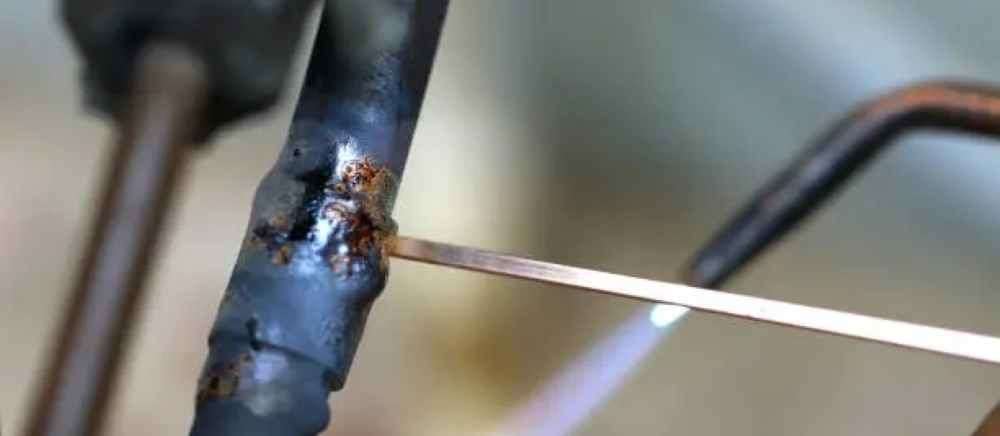
For copper brazing, the choices are more straightforward. Common filler metals include phosphorus-copper alloys (BCuP)—these are popular because they often don’t need flux for joining copper-to-copper! Silver-based alloys (BAg) are also widely used, especially where high strength or joining to other metals is needed.
The fluxes used with copper are typically borax-based. These are mildly active; their main job is simply to remove the relatively weak copper oxide (CuO) that forms during heating. Cleanup afterwards is usually minimal.
Aluminum brazing requires much more specialized materials. The go-to filler metals are aluminum-silicon alloys, like the common AA4047 (melting around 577°C). Silicon lowers the melting point to safely join the aluminum base metal (660°C).
However, the real challenge lies with the flux. Aluminum’s incredibly tough oxide layer (Al₂O₃) demands a potassium fluoroaluminate-based flux. These fluxes are highly aggressive and active, specifically designed to penetrate and disrupt that stubborn oxide barrier so the filler metal can bond.
This leads us to a critical difference: residue management. While copper flux residue is generally harmless and often left in place, aluminum flux residue is a different story.
Potassium fluoroaluminate residues are highly corrosive. Leaving them on the joint will cause severe damage over time through electrochemical corrosion. Thorough cleaning after aluminum brazing is therefore essential. This adds an essential step to the process.
Understanding these material differences sets the stage for the next logical step: how do these materials actually perform in real-world brazing processes? Let’s compare the common techniques used for copper and aluminum next.
Learn more about brazed copper joints filler and flux.
Copper vs. Aluminum Brazing Methods
Choosing the right brazing process depends heavily on whether you’re joining copper or aluminum. Let’s explore the key differences in common techniques.
Traditional Brazing Methods
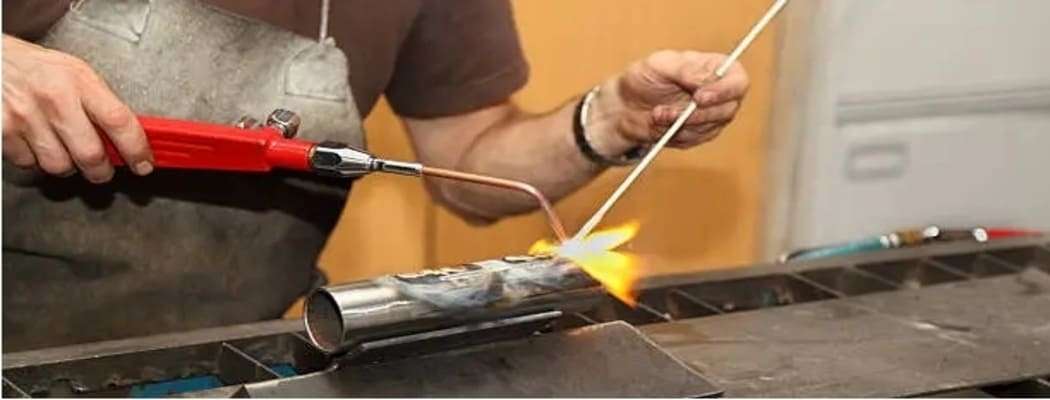
First, consider traditional methods like flame and furnace brazing. Flame brazing is very common for copper. Why? Copper conducts heat superbly. This makes temperature control relatively easy—you can apply heat evenly without much fear of overheating the part itself.
Conversely, aluminum presents a real challenge here. Its lower melting point and uneven heat flow make it much more sensitive. Applying flame heat directly risks localized overheating and potential melt-through before the filler even flows. Operators need great skill and careful torch movement for aluminum flame brazing.
Furnace brazing also shows a contrast. While both metals use this method, aluminum demands stricter controls. It requires a highly controlled inert atmosphere (like nitrogen or vacuum) to prevent instant re-oxidation during heating. Copper furnaces can often use simpler reducing atmospheres or even just careful fluxing.
Induction Brazing for Copper and Aluminum
Now, let’s look at the fascinating world of induction brazing. This method uses electromagnetic fields to generate heat directly within the part.
For copper, induction brazing is a star performer. Copper’s high electrical conductivity couples perfectly with the induction field. This creates rapid, localized heating through the skin effect.
The result? Rapid cycles, excellent energy efficiency, and low heat distortion. You see this shine in applications like motor winding connections and precision tube assemblies—speed and accuracy are key.
However, aluminum throws a curveball. Its lower electrical conductivity means it heats much more slowly under induction. To compensate, you often need significantly higher frequencies and power levels, driving up equipment complexity and cost.
Thankfully, solutions exist: Pre-plating the joint area with nickel significantly improves aluminum’s response to induction. Also, implementing very precise temperature control systems is non-negotiable to prevent overheating and collapse of the softened aluminum.
Despite these differences, both copper and aluminum induction brazing share a major advantage: automation. The localized, controllable nature of induction heat makes it ideal for robotic integration and high-volume production lines for both metals. This boosts consistency and throughput significantly.
So, we’ve seen how the processes differ, but what does this mean for the final welded joint itself? How strong is it? How reliable? Let’s examine the performance and characteristics of copper and aluminum brazed joints next.
Differences Between Copper & Aluminum Brazed Joints
The final test of any brazing process is the joint it creates. Here, copper and aluminum joints show distinct performance profiles.
Strength of Copper & Aluminum Joints
First, let’s talk strength and reliability. Copper-brazed joints are generally strong and tough. They often achieve high tensile strengths, around 200 MPa, and exhibit good fatigue resistance. This reliability suits demanding applications such as pressurized systems.
On the other hand, aluminum-brazed joints typically offer moderate strength, closer to 100 MPa. More importantly, they can be more brittle due to the potential formation of intermetallic compounds at the interface.
While perfectly adequate for their intended uses, aluminum joints don’t quite match copper’s raw strength potential.
Failure Modes of Copper & Aluminum Joints
These differences lead to distinct failure modes. Incomplete filler penetration frequently troubles copper joints. This usually happens if the gap between parts is too wide or uneven, preventing the filler metal from flowing properly and creating a weak spot.
Aluminum joints face a different challenge: interface cracking. This brittleness often stems from those intermetallic compounds (like AlCu₂if dissimilar metals are involved) formed during brazing. Cracks can start and spread easily in these brittle zones.
Corrosion Behavior of Copper & Aluminum Joints
Corrosion behavior is another major differentiator. Copper’s innate corrosion resistance strengthens its joints. Combined with the relatively mild flux residues often left behind, this means little or no post-braze cleaning is usually required.
However, aluminum joints demand careful attention. The highly active fluxes needed to break down the Al₂O₃ layer leave behind corrosive residues, primarily potassium fluoroaluminate.
These residues must be completely removed through thorough washing after brazing. If left on the joint, they trigger electrochemical corrosion, leading to rapid and severe joint degradation. Cleaning isn’t optional; it’s essential.
So, with their differing strengths, weaknesses, and durability needs, where do copper and aluminum brazed joints actually excel in the real world? Understanding their performance profiles directly points us to their best-fit applications.
Applications of Copper vs. Aluminum Brazing
So, where do you actually see copper and aluminum brazing making a real impact? The answer lies in their unique strengths—and cost considerations.
Copper brazing’s dominant areas

Copper brazing dominates applications demanding top performance. Think HVAC and refrigeration systems. Robust, leak-tight joints reliably withstand refrigerant pressures and thermal cycles.
Copper is also king in electrical power equipment (like busbars, switchgear contacts, or transformer windings). Why? Its excellent electrical conductivity combined with high joint strength is unbeatable for carrying heavy currents.
Finally, copper brazing is often the go-to for high-pressure components in hydraulics or process equipment. Its robust joints provide reliable safety margins.
Aluminum brazing ‘s key applications
Aluminum brazing, however, excels where lightness and cost-efficiency matter most. The classic example? Automotive heat exchangers. Nearly every car radiator and many heater cores are aluminum brazed.
Why? Aluminum’s lightness cuts fuel consumption, while its strong thermal conductivity enables efficient heat transfer. Beyond radiators, aluminum brazing is key for lightweight structural parts in vehicles, aerospace, or even electronics enclosures.
It’s also preferred for cryogenic vessels storing very cold liquids (like LNG), where aluminum maintains ductility better than copper at ultra-low temperatures.
Cost comparison
Now, what about cost? It’s a mixed bag. Base material cost is clearly a big win for aluminum—aluminum alloy is generally much cheaper than copper per pound.
But don’t forget the process costs! Aluminum requires more expensive fluxes and, crucially, mandatory post-braze cleaning to remove corrosive residues. Copper often avoids both these costs.
Equipment investment also differs. While basic flame setups are comparable, induction brazing equipment for aluminum usually costs more. Achieving sufficient heating in low-conductivity aluminum typically demands higher-frequency, more powerful generators than those needed for highly responsive copper.
In short: Choose copper brazing when you need maximum strength, conductivity, or pressure resistance and can justify the material cost. Opt for aluminum brazing for lightweight, cost-sensitive thermal or structural applications, but watch out for added flux, cleaning, and potential equipment expenses.
Conclusion
Copper and aluminum brazing serve distinct worlds. Copper excels where strength, conductivity, and pressure handling are non-negotiable—think HVAC lines, power grids, and high-pressure systems. Its forgiving nature, efficient heating, and minimal post-processing make it a reliable powerhouse.
Aluminum, however, rules the lightweight realm: auto radiators, aircraft structures, and cryogenic tanks thrive on its low weight and material cost. Successful aluminum brazing fundamentally depends on addressing its reactive oxide layer through specialized fluxes, rigorous cleaning, and exact temperature control.
Induction brazing plays to copper’s strengths, leveraging its conductivity for rapid, distortion-free joints. For aluminum, induction requires smart solutions like nickel plating or advanced temperature control to overcome its slower heating response. This is where precision equipment shines.
Companies like FOCO Induction design machines specifically to tackle these challenges—delivering the controlled, efficient power needed to master aluminum’s sensitivity and maximize copper’s potential in high-volume production.
Understanding these core differences—material, process, and joint behavior—is your key to smarter, stronger brazing decisions.