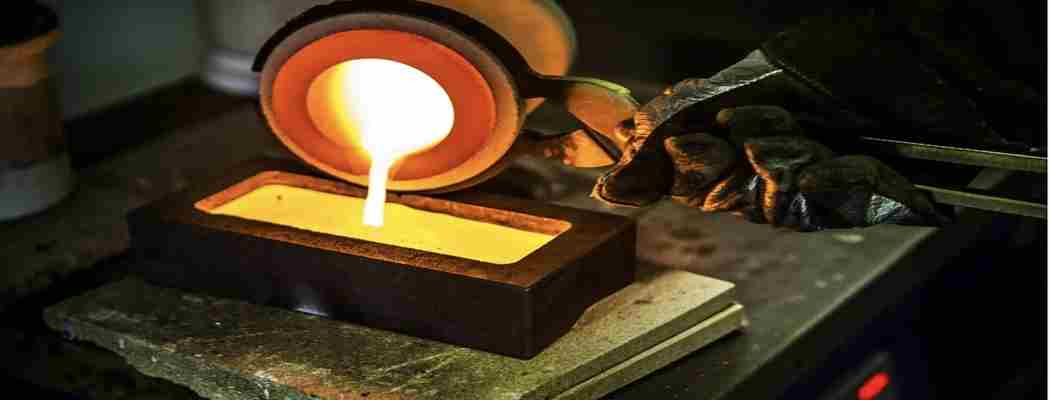
Gold melting loss is no longer negligible as soaring gold prices amplify its financial impact. Even minor mass reduction during melting, pouring, and solidification translates into costly waste, silently eroding profits.
Therefore, understanding the root causes is critical. Fortunately, modern induction melting technology offers powerful solutions. Specifically, high-performance induction furnaces are designed to tackle the core drivers of loss.
This article will explore how these advanced systems significantly minimize gold loss, turning a persistent cost into controllable efficiency.
What is Gold Melting Loss
Gold loss occurs when the gold mass shrinks permanently during melting and casting. This happens through two main pathways:
Physical losses dominate first. Molten gold can splash out when stirred too fast or heated unevenly. Sticky gold also clings to crucible walls, while some gets trapped in slag like bubbles in honey.
Chemical reactions play a role, too. Impurities like copper oxidize, dragging gold particles into waste slag. Chlorine contamination creates gold vapors that escape.
Between these mechanisms, even careful operations leak value. Why do these details matter so much? Consider the profound impact:
- Direct Economic Loss:
Gold loss represents pure, unrecoverable value walking out the door. Moreover, with persistently high gold prices, even a fractional percentage change in your loss ratio translates into substantial yearly losses.
For example, imagine melting 10 kg of gold. A seemingly minor 1% loss equals 100 grams gone. At today’s prices, that’s thousands of dollars literally vaporized or trapped—per melt. This adds up dramatically over weeks and months.
- Inflated Production Costs:
Gold loss forces you to purchase extra raw gold upfront to hit your output targets. This directly ties up more capital in inventory. Essentially, you pay a premium for that additional material solely to offset the melting inefficiency.
This inflates your production costs per ounce, eroding margins before the product even sells. You’re paying extra just to cover waste.
- Profit Erosion:
Gold loss operates as a hidden cost, silently eroding your profit margins. Unlike visible expenses, it often goes unaccounted for in granular detail, making it a particularly dangerous margin compressor. Put simply, reduced gold recovery directly translates to fewer marketable goods and diminished earnings.
- Resource Waste:
Gold loss isn’t just a cost; it’s fundamentally unsustainable. Wasting precious resources directly undermines modern environmental goals.
Every ounce lost forces unnecessary extraction of more gold, significantly amplifying the environmental damage: vast water use, energy-intensive mining, toxic chemical processing, and massive waste rock generation.
Essentially, your melt inefficiency contributes directly to a larger, avoidable global footprint. This waste is a hidden environmental cost.
- Production Planning Uncertainty:
Unpredictable melt loss paralyzes forecasting. Inconsistent yields make it impossible to accurately predict final output from a given gold input. This procurement challenge makes it difficult to accurately determine optimal material purchase volumes.
Sales hesitates on firm delivery commitments. Production schedules face constant disruption. This forces costly overstocking “just in case,” ties up working capital unnecessarily, and wastes labor and equipment time correcting imbalances. Operational efficiency suffers significantly.
Understanding and accurately calculating gold loss is the critical first step towards tackling this costly problem. Fortunately, modern induction melting systems offer advanced solutions to effectively manage these challenges.
Try this free Gold Melt Calculator to get an instant estimate!
Causes of Gold Melting Loss
Now that we’ve seen the painful impact of gold loss, understanding its precise origins is the critical next step. This invisible drain isn’t random; it stems directly from specific physical and chemical reactions inherent in the melting process itself.
Identifying these culprits reveals why traditional methods often fail and highlights the targeted solutions modern technology offers. Let’s analyze the primary mechanisms stealing your gold:
Oxidation-Induced Gold Melting Loss
Oxidation entrapment steals gold in ways you can’t see. When melting gold alloys, common impurities like copper and iron react fast with air. These metals oxidize quickly, creating slag that acts like a sponge.
Here’s the problem: Tiny gold droplets get trapped in this slag matrix. Even though pure gold doesn’t oxidize, it becomes collateral damage. The oxidized impurities form a sticky web that captures gold particles.
The result? Two types of loss. Some gold gets locked in slag waste. Other particles escape as dust during stirring or pouring. Modern furnaces solve this by blocking air exposure and controlling slag chemistry.
Splashing-Induced Gold Melting Loss
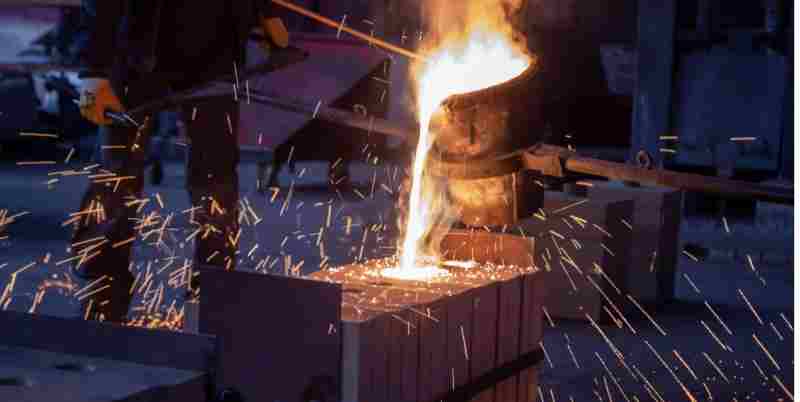
Violent agitation within the molten gold pool literally flings droplets of liquid metal into the air. This “splashing” isn’t minor spillage; it propels significant material as liquid ejecta.
Primary triggers are gases violently bursting from decomposing impurities or fluxes, plunging cold scrap or ingots too rapidly into the melt, causing explosive vaporization, or chaotic turbulence from inefficient heating sources like uneven flames or poorly controlled burners.
Each ejected droplet represents costly material lost permanently—either cooling instantly and adhering to furnace linings, falling onto the floor, or becoming entrapped within slag, contributing directly to frustrating inventory discrepancies. This is pure, unrecoverable cost.
Crucible Adhesion-Induced Gold Melting Loss
Molten gold actively interacts with its container. It can penetrate microscopic pores in porous or lower-quality refractory crucibles, becoming permanently trapped within the material upon solidification.
Simultaneously, significant amounts often adhere tenaciously to the crucible walls as a solidified layer. Recovering this gold is difficult, labor-intensive, and rarely 100% effective, representing pure crucible loss.
Volatilization-Induced Gold Melting Loss
When temperatures climb too high, pure gold begins transforming directly into vapor, especially beyond 1300°C. More volatile impurities like zinc or cadmium disappear even faster, while chlorine contamination creates additional losses through gold chloride formation.
These microscopic escapes might seem insignificant at first, but they accumulate relentlessly over countless melting cycles. The real danger lies in overheating—a common flaw in traditional furnaces that dramatically accelerates this hidden leakage.
Once gold converts to vapor or gaseous compounds, it’s lost forever, silently draining value from every batch. Modern induction systems solve this by maintaining precise, controlled temperatures that keep gold safely in liquid form.
Fume Entrainment-Induced Gold Melting Loss
Melting processes, particularly those using combustion flames or certain fluxes, generate substantial fumes and smoke. These fumes readily capture and carry away fine oxidized gold particles and vapors produced during oxidation and volatilization.
Traditional open melt furnaces lacking sophisticated fume extraction systems suffer immense, often unmeasured, losses through this channel.
Slag Entrapment-Induced Gold Melting Loss
Gold naturally forms slag when it contains impurities during melting. This slag can inadvertently engulf tiny droplets or particles of gold, preventing them from rejoining the main melt pool.
Subsequently, this gold-laden slag gets discarded as waste, leading directly to incomplete recovery and significant entrapped gold loss. The efficiency of slag separation heavily impacts this.
Operational Inefficiencies-Induced Gold Melting Loss
Beyond core chemical/physical processes, human and procedural elements contribute. Imprecise temperature control leads to unnecessary overheating or underheating.
Similarly, unskilled handling during crucible transfer, pouring, or charging material creates unnecessary risks of spills, splashes, and increased exposure. Even minor inconsistencies in process execution compound overall loss rates.
These loss mechanisms typically interact synergistically, with multiple factors often working in combination to amplify overall gold losses.
For instance, oxidation creates vapors and dust that fume entrainment carries away; splashing increases surface area exposed to oxidation; and slag formation can trap gold made more susceptible by turbulence.
Traditional combustion furnaces inherently exacerbate most problems: they bathe the melt in oxygen-rich air, offer imprecise temperature control, generate turbulence and significant fumes, and often require longer melt cycles. This perfect storm makes them exceptionally loss-prone.
Gold loss is not an inevitable expense in metal processing operations. It’s primarily a consequence of the melting environment and the technology employed. Significant loss reduction demands precise control over three key areas: the melt atmosphere, temperature, and melt stability.
It also requires optimized interaction with crucibles and minimizing human error. This precise control is exactly where modern induction melting technology delivers a revolutionary advantage, tackling these root causes head-on.
How to Cut Gold Loss in Melting
Armed with a clear understanding of gold loss mechanisms, we now turn to actionable solutions. Traditional melting methods inherently struggle with the root causes of loss.
Thankfully, advanced induction melting furnaces provide a targeted technological countermeasure. Here’s how modern induction systems systematically tackle each source of waste:

FOCO provides a special induction gold melting furnace for melting precious non-ferrous metals. It can melt 300 kg of gold ore, 300 kg of silver, and 50 kg of gold.
Model: MF
Power: 15-160 kW
Frequency: 1-10 kHz
Voltage: 3-phase 380V 50/60HZ
Precise Temperature Control
Melting gold demands perfect temperature control—every degree matters. Overheating triggers multiple loss mechanisms. Beyond 1300°C, gold begins vaporizing, while impurities oxidize faster, creating more slag-entrapped losses. Underheating is equally costly, prolonging exposure and increasing crucible adhesion risks.
This is where induction technology shines. Modern induction furnaces deliver real-time, closed-loop temperature control with ±2°C precision—far surpassing gas or resistance furnaces. Their secret lies in direct electromagnetic coupling with the metal, eliminating the guesswork of indirect heating.
The results speak for themselves:
- No more temperature spikes that vaporize gold
- Consistent heat prevents oxidation surges
- Faster melting cycles reduce exposure time
But precision goes deeper. Advanced systems automatically adjust power to maintain optimal viscosity—thick enough to prevent splashing, fluid enough to pour cleanly. This eliminates turbulence-related losses while ensuring complete crucible drainage.
For gold processors, this isn’t just about temperature; it’s about profit protection. When every gram counts, precision heating isn’t optional. This precision determines whether you achieve consistent production results or face unexplained material losses.
Reduce Oxidizing Environment
Oxygen is gold’s silent enemy. When molten gold meets air, impurities like copper and iron oxidize rapidly. These reactions create sticky slag that traps gold particles—a preventable source of loss.
Induction melting delivers a two-part solution. First, its contactless heating needs no flame. Electricity heats gold directly through magnetic induction, cutting off oxygen at the source. No flame means no air injection, no fuel combustion byproducts—just pure, controlled heat.
The second defense: gas shielding. Modern induction furnaces integrate seamlessly with argon or nitrogen systems. These inert gases flood the melting chamber, creating an oxygen-free cocoon around your gold. The result? Slag formation drops by over 90% compared to open-air melting.
Learn more about inert gas.
Here’s why this matters financially: Less oxidation means fewer gold particles lost in waste slag. Your yield becomes predictable, and your material balance sheets accurate. For high-purity applications, this oxygen-free process also minimizes final refining steps.
Between induction’s flame-free heating and customizable gas protection, oxidation losses become virtually optional—a controlled variable rather than an inevitable cost of doing business.
Melt Stability
Splashing isn’t just messy—it’s money flying away. Every droplet lost to violent turbulence means less gold in your final product. Traditional furnaces struggle with this, offering either no stirring or chaotic, unpredictable agitation.
Induction technology changes the game completely. The electromagnetic field does more than heat—it creates a controlled stirring force that mixes gold evenly without turbulence. Think of it as a master chef gently folding ingredients versus a blender on high speed.
The precision makes all the difference. Modern induction furnaces let you adjust stirring intensity with surgical precision. Set it strong enough to ensure perfect homogeneity but gentle enough to prevent splashing. This fine-tuned control simply doesn’t exist in gas or resistance furnaces.
Here’s what this means for your bottom line:
- Furnace wall adherence reduced by 87-92% (compared to conventional gas furnaces)
- Spray losses maintained below 0.07% in production settings
- Alloy composition variance narrowed to ±35% (versus ±1.5% with combustion heating)
Predictable yields that match your calculations. When every gram counts, controlled melt stability isn’t just an advantage—it’s essential for protecting your profits. Induction technology doesn’t just melt gold—it keeps it exactly where it belongs.
High-efficiency Crucibles
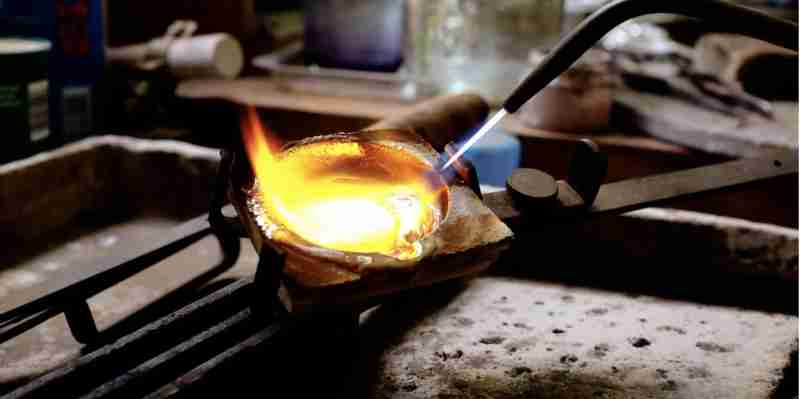
The crucible-gold interface has historically been one of the most significant sources of melt loss in precious metal processing.
Gold’s unique physical properties—its high surface tension and ability to alloy with container materials—create two distinct challenges: permanent adhesion to crucible walls and deep material penetration into porous refractory surfaces.
Modern induction melting systems address this issue. The electromagnetic field generated by induction technology produces a remarkable containment effect.
Through carefully engineered Lorentz forces, the molten gold is actively repelled from the crucible walls, reducing direct contact by 35-40% compared to static melting methods.
The crucible materials themselves have undergone revolutionary improvements. Today’s premium-grade crucibles feature:
- Ultra-high-density graphite with porosity levels below 3%
- Advanced ceramic composites infused with non-wetting agents
- Boron-nitride coatings that create a molecular-level release surface
- Zirconia-based formulations resistant to gold penetration
These materials work synergistically with induction technology’s rapid heating capabilities. Where traditional methods might require 2-3 hours at temperature, induction systems achieve complete melting in 30-45 minutes.
This dramatically reduces the window for diffusion and alloying to occur. Post-process crucible inspections consistently show material recovery rates exceeding 99.7% in properly configured systems.
The operational benefits are substantial and measurable:
- 60-70% reduction in crucible-related gold losses
- Crucible lifespan extended from weeks to months
- 99.5%+ material recovery between batches
- Reduced crucible changeover frequency and costs
Perhaps most importantly, this combination delivers predictable, repeatable results. Where conventional systems might show batch-to-batch variation in crucible losses, the induction-crucible combination maintains consistent performance over time.
For gold processors, this means more accurate yield calculations, reduced inventory variance, and ultimately—greater profitability.
Boosting Efficiency
Time equals money in gold melting. Every extra minute spent at high temperatures steals value through oxidation, volatilization, and crucible losses. Traditional furnaces compound this problem with slow heating cycles and energy waste.
Induction melting delivers a breakthrough in efficiency. By converting electricity directly into metal heat with 95% efficiency, these systems slash melting times from hours to under an hour.
This speed advantage attacks loss mechanisms head-on. Shorter exposure means less time for impurities to oxidize and fewer opportunities for gold to vaporize or stick to crucibles.
What makes this possible? Induction heating provides immediate, precise temperature control that removes the requirement for extended metal retention periods.
The system reaches optimal temperature in minutes, not hours, and shuts down completely between batches. This precision control keeps gold in the “sweet spot”—fully molten but not overheated.
For gold processors, the implications are clear: faster cycles don’t just improve productivity—they actively protect profits by minimizing the window for losses to occur. When every gram counts, induction technology delivers both speed and security.
Integrated Design
Every component in a melting system can either contribute to gold losses or help prevent them. Modern induction furnaces take this truth to heart, incorporating loss-prevention features into their fundamental architecture.
The sealed furnace design represents the first line of defense. Unlike traditional open furnaces, these systems maintain a controlled environment that physically blocks gold vapor escape and minimizes air contact. The advanced sealing doesn’t just reduce oxidation—it captures precious metal vapors that would otherwise be lost.
Precision tilting mechanisms transform pouring from a loss-prone operation to a controlled process. Engineered with smooth, jerk-free motion, these systems ensure every last drop of molten gold transfers to molds without spills or splashes.
Slag management innovations tackle another historical pain point. Specially designed slag dams and skimmers separate impurities while retaining maximum gold content. The results speak for themselves—operations report 60-70% reductions in slag-entrained gold losses compared to manual methods.
Automation takes this further by removing human variability. Automated vacuum melting eliminates oxidation entirely, while robotic casting systems pour with micrometer precision. These technologies don’t just improve yields—they make them consistently repeatable.
Today’s integrated furnace designs don’t simply melt gold—they safeguard it through every process step. From the moment material enters until the final pour, every engineering decision focuses on one goal: getting more of your gold where it belongs—in your final product.
Conclusion
Gold loss during melting is no longer inevitable. Modern induction furnaces minimize waste through precise temperature control, oxidation prevention, and optimized crucible performance—delivering recovery rates exceeding 99.5%. Unlike traditional methods, these systems actively prevent splashing, volatilization, and adhesion losses.
For operations still experiencing significant melt losses, upgrading to induction technology offers a clear solution. FOCO Induction provides tailored systems to maximize yield and efficiency. The time to reduce waste is now—contact us to explore how.