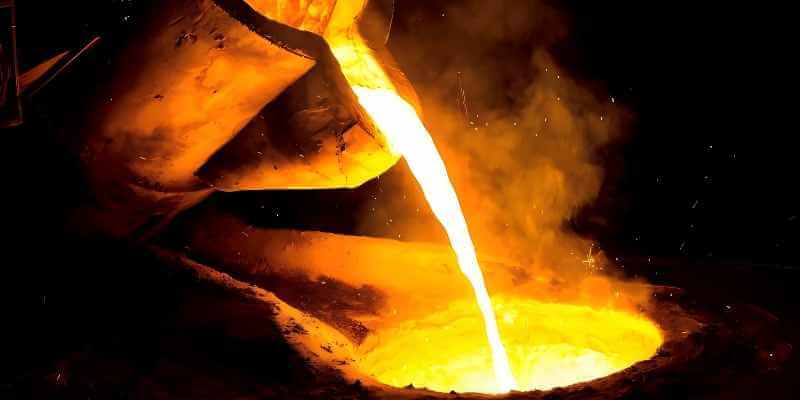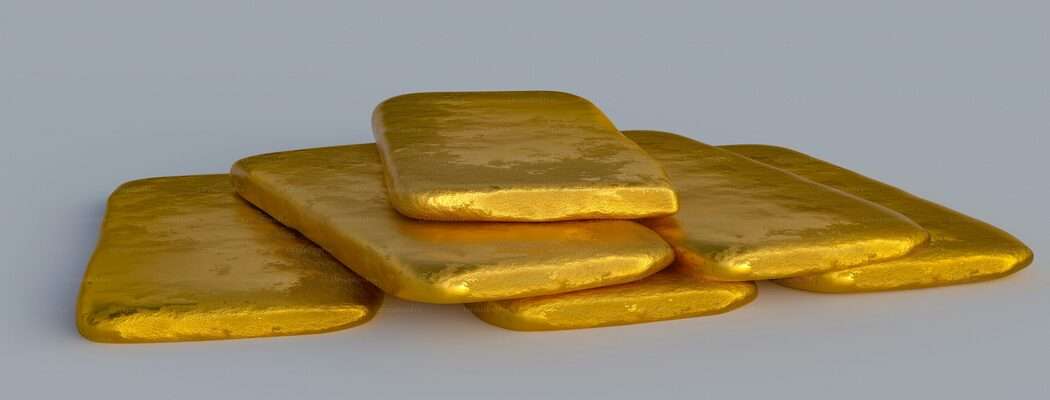
Induction melting is revolutionizing gold recovery, offering a sustainable alternative to outdated industrial practices.
Traditional methods like flame smelting and chemical extraction pose significant challenges. They consume enormous energy, release toxic pollutants, struggle to achieve high-purity output, and expose workers to dangerous conditions.
Alarmingly, current gold recovery methods from e-waste and industrial byproducts achieve just 20% efficiency, wasting significant precious metal resources.
Fortunately, a game-changing solution has emerged: induction melting technology. By harnessing electromagnetic fields to generate heat directly within metals, this method eliminates reliance on external flames or hazardous chemicals.
Its core advantages are threefold: zero contact contamination, precise temperature control, and energy efficiency exceeding 90%.
This blog delves into how induction melting is reshaping gold recovery workflows. We’ll explore its technical innovations, compare it with conventional techniques, and forecast its role in building a greener economy.
Induction Melting VS. Traditional Melting
For centuries, gold recovery relied on two dominant, yet deeply flawed, methods: chemical leaching and flame smelting.
While these techniques unlocked gold from ore and scrap, they came at a significant cost to both the environment and efficiency. Understanding their critical limitations makes the superiority of modern induction melting crystal clear.
Disadvantages of Traditional Methods
Chemical processes, particularly cyanide leaching, present a severe environmental hazard. This method relies on dissolving gold using highly toxic sodium cyanide solutions. The aftermath? Massive volumes of wastewater are contaminated with deadly cyanide compounds.
Treating this effluent is complex and expensive, and accidental releases can devastate ecosystems and water supplies. Furthermore, the process itself is inefficient for complex materials like e-waste, often requiring multiple stages and still leaving significant gold unrecovered.
Meanwhile, flame smelting, the brute-force approach of melting materials using fossil fuel burners, carries its own substantial drawbacks. The most glaring issue is oxidation.
When gold-bearing materials meet open flames and air, a harsh reality emerges: oxygen attacks the precious metal. Around 10% or more of the gold reacts, vanishing as vapor or trapped in slag.
This isn’t just inefficiency—it’s profit literally going up in smoke. Precious metal—often around 10% or more—reacts with oxygen and is lost as vapor or slag. This represents a direct, costly loss of valuable material.
Additionally, flame smelting is inherently inefficient. A significant portion of thermal energy dissipates into the ambient environment rather than being effectively transferred to the target metal.
This translates to high energy consumption, slow heating times, and poor temperature control. Operators also face considerable risks from open flames, intense heat radiation, and potential exposure to toxic fumes released during melting.
Advantages of Induction Melting
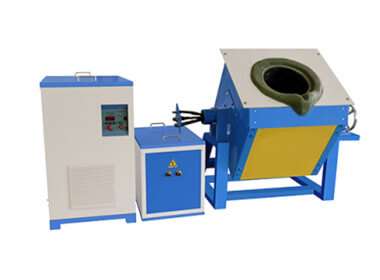
In stark contrast, induction melting technology has revolutionized conventional approaches to gold thermal processing and refinement.
At its core, it harnesses electromagnetic fields. A water-cooled copper conductor energized by alternating current produces an intense electromagnetic field.
When conductive material—like gold-bearing scrap—is placed within this field, electromagnetic eddy currents directly induce heat within the metal itself. This direct energy transfer is revolutionary.
Critically, because the heat is generated inside the metal, not in the surrounding air, thermal efficiency soars above 90%.
Energy use nosedives—induction slashes power demands versus flame furnaces. Speed soars too: where traditional methods crawl to 1300°C in 30+ minutes, induction hits target temps in mere minutes.
But the most significant environmental leap is the ability to perform the melting process under a protective inert gas atmosphere. This sealed environment completely excludes oxygen. Consequently, there is zero oxidation loss—preserving every precious gram of gold.
Simultaneously, the closed system prevents the release of toxic fumes and particulates into the environment, achieving true zero-pollution melting. Operator safety is also vastly improved by eliminating open flames and containing the process.
The comparison is undeniable. Traditional chemical methods generate hazardous waste, while flame smelting wastes energy and gold through oxidation and inefficiency.
Induction melting harnesses two game-changing advantages: precise electromagnetic energy and inert gas shielding. The result? Unmatched thermal efficiency, zero oxidation losses, and a truly closed-loop clean system.
This shift isn’t just incremental; it represents a quantum leap in sustainability, profitability, and safety for gold recovery.
But this is just the theory. The real magic happens when induction melting tackles actual gold recovery challenges—whether liberating microscopic gold from circuit boards or reclaiming jewelry scrap with zero loss. Let’s see it in action.
Induction Melting for Gold Scrap Recovery
Induction melting’s versatility shines in reclaiming gold from diverse secondary sources. This versatile technology addresses diverse applications, including e-waste gold recovery, jewelry alloy refinement, industrial waste detoxification, and financial gold verification. Below, we dissect its revolutionary role across four critical sectors
Recover Gold from Electronic Waste
- Overview of Gold Recovery Process
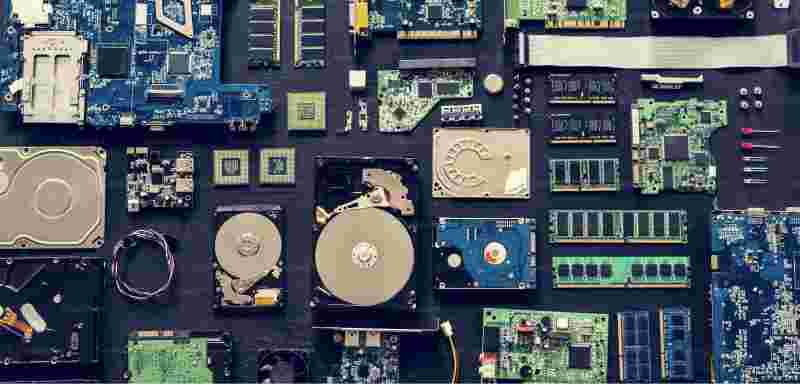
Recovering gold from electronic waste starts with preprocessing. Technicians manually or mechanically dismantle devices to isolate gold-bearing components—primarily printed circuit boards (PCBs), CPUs, and connector pins.
Next, they shred these components and pulverize them into fine powder particles under 1 mm using hammer mills or ball mills. Subsequently, gold extraction follows two common paths:
Chemical leaching: Operators submerge the powder in aqua regia or sodium cyanide solutions. This dissolves gold into liquid form, which they then precipitate as crude gold by adding zinc powder.
Explore more about aqua regia.
Pyrometallurgical smelting: Alternatively, they melt the powder in furnaces to separate precious metals from base materials, forming gold-silver alloy ingots.
Finally, purification refines this crude gold. Electrolytic refining dissolves impure gold anodes in hydrochloric acid electrolyte, depositing 99.99% pure gold on cathodes. Chemical reduction with oxalic acid or sodium metabisulfite achieves similar purity before casting.
- When to Use Gold Induction Melting Furnaces
Critically, induction furnaces deliver maximum value during the pyrometallurgical enrichment stage—specifically when processing chemically leached residues or low-grade e-waste powders. Here’s their operational protocol:
The process begins with technicians blending gold-containing powder with a precisely calibrated flux mixture of 40% borax, 30% sodium carbonate, and 30% silica.
Once loaded, high-frequency power generates penetrating electromagnetic eddy currents that induce rapid, direct heating throughout the mixture.
The system reaches the optimal separation temperature of 1,300±50°C in just 5 minutes. This rapid heating enables precious metals to alloy with copper/lead, forming a dense metallic phase that floats above the lighter silicate slag.
The substantial density differential facilitates efficient separation by gravitational forces. Operators first tap the furnace to access the molten contents. They carefully pour the gold-rich alloy into prepared molds for solidification. Meanwhile, the separated slag is channeled for either safe disposal or subsequent reprocessing.
- Why Use Gold Induction Melting Furnaces
- Efficient Heating:
Electromagnetic fields transfer >90% of energy directly to metals—bypassing air heating losses entirely. This slashes heating time to 1/6th of gas furnaces, reducing energy consumption by 60%.
- Precise Temperature Control:
Infrared sensors continuously monitor melt temperature, while PLC systems adjust power output instantly. This maintains a ±5°C stability window—critical for preventing gold volatility (gold boils at 2,800°C but oxidizes above 1,064°C).
- Environmentally Friendly Closed Loop:
A fully sealed furnace body flooded with argon gas eliminates fume escape. Baghouse dust collectors then capture >99% of particulate matter (including arsenic, lead, and cadmium).
Exhaust gases comply with EU BAT emission limits—eliminating cyanide use cuts wastewater treatment costs by 40%.
- Economic Benefits:
Energy savings: 150 kWh/ton vs. 380 kWh/ton in reverberatory furnaces
Higher yield: 95% recovery from slag vs. 70% in cyanide leaching
Operational efficiency: One furnace replaces leaching tanks, filters, and electrolysis cells
Cost reduction: 380/ton processing cost vs.630/ton in traditional routes
Recover Gold from Jewelry Scrap

- Overview of Recovery Process
Traditional jewelry recycling struggles with multi-stage inefficiencies. First, technicians manually sort scrap by gold content, separating 14K, 18K, and 22K items while removing diamonds, gemstones, and non-metallic inserts.
Next, they melt sorted batches in gas-fired crucible furnaces at 1,100–1,300°C. This produces crude alloy ingots contaminated with solder metals (zinc, copper, and nickel).
Critically, these impure ingots require electrolytic purification: operators suspend them as anodes in silver nitrate electrolyte tanks, applying current for 72 hours.
This slowly dissolves base metals while depositing 99.9% pure gold on stainless steel cathodes. This process consumes 40 kWh/kg of gold with significant metal entrapment in anode slimes.
- When to Use Induction Melting Furnaces
Induction furnaces are optimally deployed during the final melting and purification stage for karat gold scrap. Sorted jewelry enters the furnace directly without added chemicals.
The system operates by automatically adjusting its frequency between 1-10 kHz to match specific melting requirements: 879°C for 14K gold, 916°C for 18K gold, and 1,064°C for pure gold.
During melting, electromagnetic forces actively stir the molten metal. This agitation breaks apart zinc oxide surface layers that typically trap gold particles. After 15 minutes of homogenization, technicians directly cast the molten gold into 99.9% pure ingots.
- Why Use Induction Melting Furnaces
- Superior Metal Recovery
The argon gas environment maintains oxygen levels consistently below 0.001%, effectively reducing gold loss to less than 0.005%. This represents a dramatic improvement compared to traditional methods’ 8% loss rate through oxidation and slag formation.
- High Purity Without Electrolysis
Through precise temperature control combined with electromagnetic stirring action, the process achieves 99.9% gold purity. This eliminates the need for conventional 72-hour electrolytic purification and its associated silver nitrate electrolyte requirements.
- Significant Energy Savings
Energy consumption measures under 150 kWh per ton of material processed, representing a 50% reduction compared to conventional gas furnaces that typically consume over 300 kWh/ton.
- Enhanced Safety & Space Efficiency
The system completely removes toxic chemical handling requirements while reducing facility space needs by about 40% compared to traditional setups.
Recover Gold from Industrial Waste
- Overview of Recovery Process
Industrial gold recovery traditionally grapples with toxic complexities. Technicians first preprocess waste materials like electroplating sludge and spent catalysts. They dehydrate and compress sludge into briquettes while crushing and calcining catalysts to burn off organic contaminants.
Next comes the hazardous core operation: cyanide leaching. Operators soak materials in sodium cyanide solution to dissolve gold, followed by activated carbon adsorption to capture gold particles.
See more knowledge about cyanide leaching.
Subsequently, they desorb gold from the carbon and recover it through electrolysis. Finally, workers cast the electrolytically deposited gold slime into ingots—a process burdened by toxic waste and inefficiency
- When to Use Induction Melting Furnaces
Induction melting provides a breakthrough solution for industrial waste by eliminating cyanide during the harmless melting stage.
Technicians skip the leaching process completely, feeding preprocessed waste directly into the induction furnace. The system then performs a two-stage thermal purification:
First, it heats the material to 400°C in an oxygen-controlled environment. This safely breaks down any cyanide residues into harmless carbon dioxide and nitrogen gas.
Simultaneously, temperatures increase to 1,200°C to release gold trapped in carbon micropores. Crucially, electromagnetic fields actively concentrate gold droplets, speeding their settlement to the furnace bottom.
Operators use vacuum extraction to transfer the purified molten gold directly into molds, achieving a process that produces no toxic byproducts and requires no chemical baths.
- Why Use Induction Melting Furnaces
This approach delivers transformative advantages.
- Zero Toxic Substances: It achieves zero toxic discharge by converting cyanides into benign gases—eliminating wastewater treatment expenses that traditionally consume 35% of operating budgets.
- Higher Recovery Rate: recovery rates jump from 70% to 95% because direct thermal liberation accesses microporous gold that chemical leaching misses.
- Operational Safety: The fully sealed system ensures workers face zero cyanide exposure compared to traditional plants handling lethal solutions daily.
Financial Recycling

- Overview of Recovery Process
Financial institutions face unique challenges when recycling gold bars and coins. Technicians first preprocess items by melting them together, recording exact weights, fineness levels, and laser-etched serial numbers.
Critically, they then ship these melted batches to external refineries for purification—a multi-step ordeal involving flame smelting, 24-hour electrolysis, and recasting.
Finally, the new ingots return for laser re-marking with original serial numbers, creating audit trail gaps during transit and processing.
- When to Use Induction Melting Furnaces
Transformatively, induction technology enables in situ regeneration under direct bank supervision.
Instead of shipping materials offsite, technicians feed original gold items directly into the induction furnace within secured vault facilities. The integrated process unfolds seamlessly:
First, argon gas floods the chamber, slashing oxygen below 0.001% to prevent microscopic gold loss. Next, real-time laser spectroscopy continuously analyzes melt composition during heating.
Crucially, once verified, the same furnace casts new ingots while laser-engraving the original serial numbers. Simultaneously, all physical data—weight, fineness, and IDs—auto-uploads to an immutable blockchain ledger for instant certification.
- Why Use Induction Melting Furnaces
- Absolute Mass Integrity: The argon-shielded environment caps gold loss at <0.005%—20x lower than traditional gas furnaces. For a 400 oz gold bar, this preserves $500 extra value per melt cycle while meeting LBMA Good Delivery standards.
- Perfect Chain of Custody: New bars maintain original serial numbers. Blockchain logs all process data from start to finish, solving reconciliation problems in multi-party transfers.
- High Efficiency: The complete process finishes in 1 hour instead of 24+ hours for traditional transport, purification, and return. This 24x faster turnaround eliminates third-party risks while accelerating asset redeployment.
Conclusion
Induction melting has redefined gold recovery, offering a cleaner, faster, and more profitable alternative to outdated methods. From e-waste to jewelry scrap and industrial sludge, induction melting delivers unmatched precision and sustainability.
Leading refineries worldwide are already adopting this innovation, proving its viability at scale. As global demand for responsible resource recovery grows, induction melting positions gold recycling as a benchmark for the circular economy.
FOCO Induction‘s advanced melting furnaces leverage these technological breakthroughs. They deliver industry-leading efficiency, precise temperature control, and completely pollution-free operation—the perfect solution for modern gold recovery needs.