Scrap steel recycling tackles two critical challenges facing steelmakers today: resource scarcity and mounting pressure to cut carbon emissions. Induction melting technology offers an efficient pathway forward.
The steel industry generates 10% of global CO₂ emissions. In seeking alternatives to carbon-intensive iron ore processing, recycled scrap emerges as our essential “urban mine.” It’s a readily available, sustainable solution.
This readily available, renewable resource can replace virgin ore at scale. Induction furnaces provide the key, enabling low-carbon, energy-efficient transformation of diverse scrap into high-quality steel.
They deliver faster melting, precise thermal control, and superior metal recovery—crucial advantages for building a greener steel industry. Let’s explore how this technology works.
Challenges of Scrap Steel Recycling
The scrap steel recycling industry faces multiple obstacles that hinder efficient and sustainable operations. These challenges span material characteristics, processing technologies, and regulatory requirements, each presenting unique difficulties that must be addressed.
Complexity of Scrap Steel Raw Materials
Recycled steel scrap presents natural quality challenges that make processing difficult. First, surface contaminants like oil, grease, paint, and plastic coatings are commonly found on scrap materials.
During melting processes, these impurities generate harmful emissions, including sulfur dioxide (SO₂) and nitrogen oxides (NOₓ), creating both environmental pollution and workplace safety concerns.
Second, the chemical composition varies significantly between different scrap sources. Excessive levels of trace elements such as lead (Pb), arsenic (As), and aluminum (Al) frequently appear in scrap streams.
These unwanted components negatively affect the mechanical properties and performance of recycled steel products. Consequently, recyclers must implement rigorous sorting and pretreatment procedures to ensure material quality meets production standards.
Limitations of Traditional Steel Melting Technologies
Conventional steel melting methods exhibit several technical shortcomings. For example, electric arc furnaces (EAF) and basic oxygen converters rely heavily on chemical reactions involving oxygen injection and carbon additives.
This approach consumes substantial energy, typically over 500 kWh per metric ton. It also generates significant carbon dioxide emissions. Similarly, traditional coke-fired furnaces demonstrate poor thermal efficiency and slow processing speeds.
These outdated systems need 40-60 minutes to melt just 20 kg of scrap iron. Their temperature control remains limited to ±50°C accuracy. Such technological limitations directly impact both production efficiency and product quality consistency.
Scale and Environmental Pressure
The industry faces growing operational and regulatory challenges. Specifically, the bulk density requirement for scrap steel (minimum 1.3 tonnes per cubic meter) creates handling difficulties. Low-density scrap materials reduce energy efficiency by at least 10% during melting operations.
Global environmental regulations are becoming increasingly strict. They are driving the steel industry toward sustainable transformation through three key mechanisms. These include emissions trading systems, tighter environmental standards, and green technology incentives.
Furthermore, international climate agreements like the Paris Accord are accelerating the adoption of cleaner production methods across the sector.
These combined factors create a challenging environment where recyclers must simultaneously improve technical processes while meeting evolving compliance requirements.
The scrap steel recycling industry struggles with material impurities, inefficient melting technologies, and strict environmental regulations. Induction melting furnaces provide a solution with their precise temperature control, faster processing, and lower emissions—key advantages we’ll examine next.
How to Use Induction Melting Furnaces for Scrap Steel Recycling
Induction furnace technology transforms scrap iron processing through its unique blend of rapid operation, exact temperature control, and eco-friendly performance. Unlike traditional methods, this technology uses electromagnetic fields to heat metal directly—no flames, no chemical reactions, just clean and efficient energy transfer.
Whether you’re processing small batches or industrial-scale loads, induction melting delivers consistent results with minimal waste. Let’s break down the key steps to maximize its potential.
Scrap Steel Pretreatment & Loading
Before melting scrap iron in an induction furnace, proper pretreatment ensures efficient melting and high-quality output.
Physical Treatment
– Crushing & Sizing: Use hydraulic shears or shredders to break down large scrap into uniform chunks (under 30 cm). Smaller pieces improve charge density and cut melting time by up to 20%.
– Magnetic Separation: Run scrap through a drum-type magnetic separator to remove non-ferrous contaminants like aluminum, copper, or rubber. This measure safeguards against unwanted alloy mixing while prolonging the durability of furnace linings.
Chemical Cleaning
– Degreasing: Soak oil-coated scrap in alkaline solutions (e.g., sodium hydroxide) or organic solvents to strip away lubricants and cutting fluids.
– Derusting: For heavily rusted scrap, a quick dip in diluted hydrochloric or sulfuric acid for 10–20 minutes does the trick. Rinse thoroughly afterward, or opt for sandblasting for a mechanical clean.
Loading Tips
– Layer small and large pieces to maximize furnace capacity.
– To ensure uniform melting, maintain proper load levels and avoid scrap accumulation that causes uneven heating (“bridging”).
Melt Scrap Steel
Electromagnetic Induction Heating
– Frequency Selection: Medium-frequency (1–10 kHz) induction furnaces strike the perfect balance for scrap iron, offering deep penetration (5–50 mm) and rapid heating.
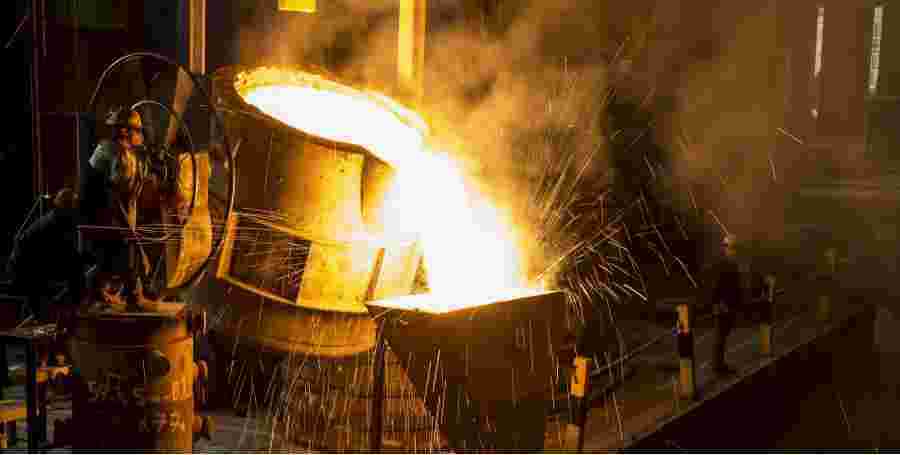
– Eddy Current Heating: The alternating magnetic field induces eddy currents inside the scrap, generating heat from within. A 3-ton furnace typically hits 1500°C in just 12–15 minutes at 750–1000 kW power.
Carbon Addition & Alloying
– Carburization: Add high-purity graphitized carburizer (C ≥ 98%, S ≤ 0.05%) in small batches (0.2–0.5% of melt weight). Stir with a rake to ensure even absorption, adjusting carbon content for high-carbon steel (0.6–1.4% C).
– Deoxidation & Graphite Nucleation: When a third of the scrap melts, toss in silicon carbide at 0.1–0.3% of the charge weight. SiC breaks down into silicon and carbon, which promotes graphite formation in cast iron.
Temperature Control
– Infrared Pyrometry: Monitor melt temperature in real-time (±10°C accuracy).
– Holding Stage: After reaching 1500°C, hold for 5–10 minutes to let slag (SiO₂, Al₂O₃) float to the surface and homogenize the carbon distribution.
Scrap Steel Post-Processing & Recovery
Slag Removal
– Low-basicity slag (CaO/SiO₂ < 1.5) forms during melting. Skim it off with a graphite rake or automated slag lifter.
– Proper skimming ensures ≥98% metal recovery. The slag can even be reprocessed to extract residual iron.
Casting & Further Refining
– Direct Casting: Pour molten iron into preheated sand molds or ingot molds for foundry applications.
– Short-Process Steelmaking: The molten metal can be directly transferred to an AOD furnace for precise carbon and alloy adjustment. Then refined in a ladle furnace under protective atmosphere. This liquid-to-liquid process cuts energy use by 30-50% compared to reheating solid scrap, while improving steel quality and production efficiency.
Induction melting turns scrap iron recycling into a fast, precise, and eco-friendly process. From pretreatment to casting, every step is optimized for efficiency and quality.
The result? Higher metal yields, lower energy costs, and a smaller carbon footprint—proof that sustainable practices can also boost productivity.
But the benefits don’t stop there. Next, we’ll dive into the advantages of induction melting, from its environmental perks to its unmatched flexibility across industries. Whether you’re a small recycler or a large-scale steelmaker, this technology has something game-changing to offer.
See application of induction melting—Induction Melting Steel 600 kg.
Advantages of Induction Melting in Scrap Steel Recycling
Induction melting isn’t just another metal processing method—it’s a revolutionary approach transforming scrap iron recycling. By using electromagnetic fields instead of traditional combustion, this technology delivers unmatched efficiency, superior quality control, and exceptional sustainability.
Induction melting is solving key industry challenges across all scales of operation. Small foundries and large steel mills alike are adopting this technology. Operators worldwide recognize its advantages. The system helps future-proof operations against tightening environmental regulations.
Let’s explore why this innovative method is rapidly becoming the preferred choice for modern metal recyclers.
Environmental Benefits of Induction Melting
The steel industry faces unprecedented pressure to reduce its environmental impact, and induction melting provides a clear solution.
Dramatically lower emissions: When processing clean scrap, induction furnaces produce just 0.8 kg CO₂ per ton—an astonishing 93% reduction compared to electric arc furnaces (11 kg/t). This reduction is equivalent to the carbon sequestration of 50 mature trees for every ton processed.
Renewable energy compatibility: These systems integrate seamlessly with solar, wind, or hydroelectric power, enabling true carbon-neutral production when using green energy sources.
Elimination of harmful byproducts: Unlike coke-fired methods, induction completely avoids SO₂ and NOx emissions since there’s no combustion process involved.
Reduced waste generation: The precise temperature control minimizes slag formation by up to 40% compared to traditional methods.
Economic Advantages
Induction melting is transforming iron foundries by delivering both environmental benefits and strong economic returns. Compared to traditional cupola or electric arc furnaces, induction melting offers significant cost savings while improving efficiency in iron smelting.
Induction furnaces heat iron directly using electromagnetic fields, eliminating the energy losses seen in combustion-based furnaces. This reduces electricity consumption by 15-30%, lowering operational costs. Since iron production is energy-intensive, even small efficiency gains lead to major savings.
Oxidation causes significant iron loss in traditional furnaces, but induction melting minimizes exposure to air. This means less slag formation and more usable iron from each batch of scrap. Foundries report 3-5% higher metal recovery, directly improving profitability.
Unlike cupola furnaces that require frequent refractory repairs or electric arc furnaces with consumable electrodes, induction systems have no direct contact with molten iron. This extends equipment lifespan and cuts downtime, keeping production running smoothly.
Advanced automation maintains exact melting temperatures for iron, minimizing the need for operator adjustments. Workers spend less time adjusting burners or managing slag and more time on quality control and casting. This boosts productivity while keeping labor costs stable.
While induction furnaces require a higher initial investment than cupolas, the payback period is often just 12-24 months. Lower energy bills, reduced iron waste, and minimal maintenance quickly offset the upfront cost. For foundries processing iron, switching to induction melting is not just environmentally smart—it’s a clear financial win.
Operational Flexibility
One of the most valuable aspects of induction melting is its adaptability to different production needs.
Variable batch sizes: The same equipment can handle small experimental batches or large production runs with simple adjustments.
Material versatility: From cast iron to specialty alloys, induction systems maintain precise control over a wide range of materials.
Quick changeovers: Switching between different metals or alloys takes minimal downtime compared to traditional methods.
Continuous operation: Advanced systems can run around the clock with consistent results.
This flexibility proves particularly valuable for operations that process multiple metal types or need to adjust production frequently. The ability to respond quickly to changing material requirements gives businesses using induction melting a distinct advantage in today’s dynamic markets.
Superior Steel Quality Control
In metal production, consistency equals credibility—and induction melting delivers unparalleled quality assurance.
Self-regulating electromagnetic stirring: The natural eddy current effect ensures uniform chemistry throughout the melt without costly argon bubbling or manual stirring.
Vacuum capabilities: For aerospace and nuclear applications, vacuum induction removes hydrogen and nitrogen to sub-ppm levels, preventing embrittlement in critical components.
Precise temperature management: Digital controls maintain temperatures within ±10°C, preventing overheating that could damage alloying elements.
Comprehensive traceability: Automated systems generate detailed melt reports, including temperature curves, chemistry adjustments, and energy consumption—simplifying quality certification and process optimization.
Induction-melted tool steels consistently show 15-20% fewer inclusions than conventional methods, resulting in dies and molds with 30% longer service life. This quality improvement alone can justify the equipment investment for many precision manufacturers.
Safer Working Environment
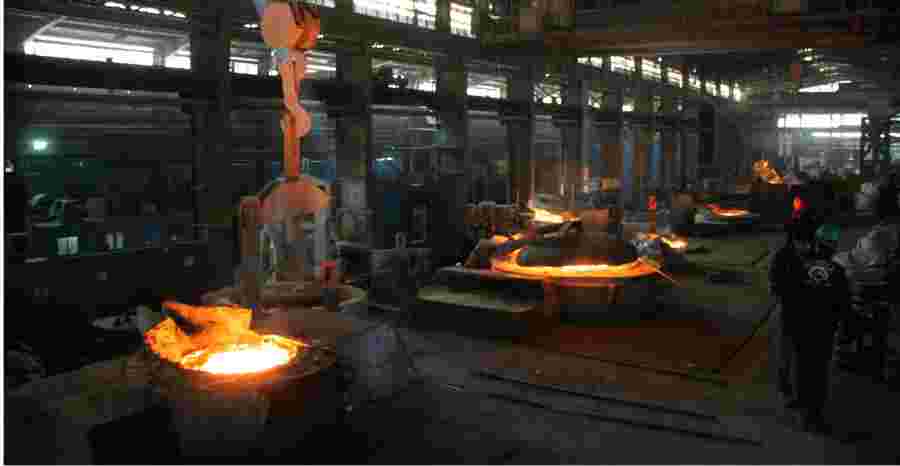
Beyond production benefits, induction melting significantly enhances workplace conditions.
Elimination of open flames: Removes fire hazards associated with gas or coke furnaces.
Reduced heat radiation: Operators experience ambient temperatures 10-15°C cooler than traditional furnace environments.
Noise reduction: Operates at 70-75 dB compared to 90+ dB for arc furnaces—below OSHA’s action level for hearing protection.
Improved air quality: Eliminates fumes and particulates generated by combustion processes.
These improvements not only benefit workers but also reduce insurance costs and minimize regulatory compliance issues.
Induction melting proves conclusively that eco-friendly practices can enhance—rather than compromise—operational and financial performance. This technology offers a unique combination of environmental benefits, cost savings, and quality advantages.
Along with significant workplace improvements, it’s fundamentally reshaping how the world recycles scrap iron.
These powerful advantages translate into practical applications across countless industries, as we’ll explore in the next section. From neighborhood scrap yards processing a few tons weekly to billion-dollar steel plants handling continuous production, induction melting serves diverse needs.
Its remarkable versatility unlocks opportunities that traditional methods simply cannot match. At the same time, it provides a scalable solution that grows with your business needs.
Where is Induction Melting Used for Scrap Steel?
Induction melting technology is transforming scrap steel recycling across various scales of operation, offering solutions that are both efficient and environmentally friendly.
Its ability to process diverse scrap types while maintaining high energy efficiency makes it ideal for different recycling scenarios. Here’s how it’s being applied in the industry today.
Small-Scale Scrap Recycling
Local scrap yards and independent recyclers benefit significantly from induction melting. Unlike large-scale steel plants that require massive volumes of scrap, these facilities often deal with smaller, more varied batches.
A medium-frequency induction furnace works well for small scrap operations. It can process 100-500 kg of scrap steel daily. This makes it ideal for businesses with limited space and resources.
The furnace melts scrap quickly, taking just 15-20 minutes per cycle. Its energy use stays low at 400-530 kWh per ton. These features help recyclers run profitably without storing large scrap piles.
The system also offers precise temperature control. This reduces oxidation loss during melting. Higher metal recovery rates result—a crucial benefit when every kilogram matters to small businesses.
High-Quality Steel Production
One of the biggest challenges in scrap steel recycling is dealing with impurities like oil, paint, rubber, and non-ferrous metals. Traditional methods, such as electric arc furnaces, struggle with these contaminants, often leading to harmful emissions and inconsistent steel quality.
Induction melting, however, excels in this area. The electromagnetic stirring action naturally separates non-ferrous metals, while the controlled heating process prevents excessive slag formation.
Induction furnaces provide a cleaner solution for recyclers. They offer a more efficient way to produce high-quality steel. This technology works particularly well for automotive scrap, demolition steel, and industrial machinery waste. Best of all, it achieves these results without requiring extensive pretreatment.
Large-Scale Scrap Processing for Steel Mills
Major steel producers are increasingly integrating induction melting into their operations to enhance scrap utilization.
Preheating scrap steel to 800°C brings significant benefits. This thermal treatment occurs before charging into converters or electric arc furnaces (EAFs). The result is dramatically increased scrap ratios. In some operations, these ratios reach 40-80%.
This reduces reliance on iron ore and lowers carbon emissions. The induction pre-melting stage also shortens the overall refining process, cutting energy use by 30-50% compared to traditional methods.
For steel mills under pressure to meet sustainability targets, this hybrid approach offers a practical way to boost scrap consumption while maintaining production efficiency.
Specialty Steel and Alloy Recycling
Not all scrap steel is destined for basic construction steel. Some contain valuable alloying elements (e.g., nickel, chromium, molybdenum) that can be recovered and reused in high-performance steels.
Induction melting is particularly effective here because of its precise temperature control and low oxidation rates. Vacuum induction furnaces take this further by removing gases like oxygen and nitrogen, making them ideal for recycling aerospace-grade scrap or tool steel.
This capability allows specialty steel producers to maintain tight composition control while reducing reliance on virgin materials.
Induction melting is revolutionizing scrap steel processing at every scale. Small recyclers benefit from compact, efficient systems processing 100-500 kg batches, while large mills achieve 40-80% scrap ratios through preheating.
The technology excels at handling contaminated scrap and recovering alloys, all while cutting energy use by 30-50%. With superior temperature control and lower emissions, induction melting is shaping the future of sustainable steel production.
Conclusion
Induction melting technology is transforming scrap steel recycling with unmatched efficiency, precision, and sustainability. From small recyclers to large steel mills, it delivers faster melting, higher metal recovery, and lower emissions—solving key challenges like contaminated scrap and alloy recovery.
By cutting energy use by 30-50% and boosting scrap ratios up to 80%, this technology proves that eco-friendly practices can also drive profitability.
For industry-leading induction melting solutions, FOCO Induction provides advanced furnaces designed to maximize your scrap recycling potential.