Induction hardening of steel solves a major headache for modern manufacturers. Think about critical parts like engine crankshafts, heavy-duty tools, or gear teeth. They face intense demands: their surfaces need incredible hardness to resist wear and abrasion, day in and day out.
Yet, the core must remain tough and ductile to absorb shocks and impacts without failing. Getting both properties in the same part is tricky.
So, how do we efficiently and precisely deliver that vital surface hardening? That’s where induction hardening shines. Forget slow ovens or messy flames. This technique is a standout for being fast, clean, and incredibly controllable. It’s become essential for creating high-performance components across countless industries.
Essentially, induction hardening uses electromagnetic magic to heat only the surface layer of steel super quickly, followed by immediate quenching. The result? A perfectly hardened case exactly where you need it, over a strong, resilient core. It boosts productivity, minimizes distortion, and keeps the work environment cleaner.
Ready to understand how this powerful process actually works and why it’s so important for precision manufacturing? Let’s dive in and explore the core principles of induction hardening!
What is Induction Hardening of Steel?
So, what exactly is induction hardening? In simple terms, it’s a heat treatment process that uses electromagnetic induction to quickly generate heat on the surface of a steel component.
This heated layer is then rapidly cooled, or quenched, to create an exceptionally hard, wear-resistant outer case. Meanwhile, the core of the part remains its original tough and ductile state. This combination is the secret to making incredibly strong and durable parts.
How Does It Work?
The entire process relies on the fundamental principles of electromagnetism. It happens in three key steps:
First, we create an alternating magnetic field. A copper coil, known as an inductor, is shaped to fit around or near the part. When we pump a high-frequency alternating current through this coil, it generates a rapidly changing, intense magnetic field around it.
Next, this changing magnetic field induces powerful swirling currents inside the steel part itself. We call these eddy currents. The part essentially acts like the secondary loop in a transformer, with electricity generated not by direct contact, but through magnetic influence.
Finally, we get resistive heating. Steel has electrical resistance. So, when these strong eddy currents flow through the surface of the part, this resistance instantly converts the electrical energy into intense heat.
This heating action is so rapid and concentrated that it can bring the steel surface to its hardening temperature in a matter of seconds without ever touching the flame or an open coil.
Key Advantages of Induction Hardening
This specialized heating approach provides significant advantages compared to conventional hardening methods.
- Primarily, it’s incredibly efficient and fast. The direct heating eliminates warm-up times, allowing parts to be treated in seconds, which drastically boosts production rates.
- Furthermore, it offers superior precision and control. The heat is localized exactly where you want it. This minimizes distortion and allows engineers to precisely define the hardening pattern and depth simply by tuning the power, frequency, and coil design.
- Moreover, it is a much cleaner and more environmentally friendly Since there’s no open flame or external furnace, there’s little scale, decarburization, or fumes. This results in a better part finish and a safer, cleaner workshop.
- Finally, the process is perfectly suited for automation. The consistent, repeatable nature of induction heating makes it ideal for integration into fully automated production lines with robots for loading and unloading parts.
Now that we understand how induction hardening works and why it’s so beneficial, let’s dive into the key parameters that control this process and see how they influence the final hardened result. Mastering variables like frequency, power density, and heating time is crucial for achieving that perfect hardened layer.
What Factors Influence Induction Hardening of Steel?
Achieving the perfect hardened case on steel components isn’t magic—it’s science. Success with induction hardening hinges on mastering several key parameters specifically tuned for steel hardening.
Think of these as the essential controls for sculpting that critical hardened layer: deep enough for resilience, hard enough for wear, precisely placed, and with minimal distortion. Let’s examine the key variables affecting steel results.
1. Frequency Selection: Controlling Steel’s Hardened Depth
The frequency of the current powering your induction coil is the master switch for how deep the hardened layer penetrates into the steel. This is governed by the skin effect, a fundamental electromagnetic principle.
- The Steel Hardening Rule: Higher frequencies intensify the skin effect. This forces the induced eddy currents to flow extremely close to the steel’s surface. The result? Heating (and consequently, hardening after quenching) is concentrated in a very shallow layer. Lower frequencies reduce the skin effect, allowing the current (and heat) to penetrate deeper into the steel part before quenching.
- The Steel Analogy: Imagine hardening a thick steel shaft. Using high frequency is like blasting the outer skin with intense heat—great for a gear tooth surface needing wear resistance. Using lower frequency is like allowing heat to soak deeper—essential for something like a crankshaft journal needing a thick hardened case for strength.
- Steel Application Examples:
Shallow Case (e.g., gear teeth surface, knife edge): Use High Frequency (100-500 kHz+).
Deeper Case (e.g., axle shafts, piston rods): Use Medium Frequency (1-10 kHz).
2. Power Density: Driving Steel’s Transformation Speed & Hardness
Power density is the intensity knob—the amount of power (in kW) delivered per unit area of the steel surface (e.g., kW/sq. in.).
- Impact on Steel Hardening: Higher power density equals dramatically faster heating rates at the steel’s surface. This rapid thermal shock is crucial.
- Why Speed Matters for Steel: This ultra-fast heating promotes the formation of a finer, more uniform martensitic microstructure within the steel during quenching. In steel hardening, a finer martensite structure directly translates to higher attainable surface hardness and often better toughness within the hardened zone. Essentially, you’re “freezing” a superior microstructure in the steel by heating it so quickly.
3. Heating Time: Balancing Steel’s Surface and Core
Heating time must be carefully coordinated with power and frequency specifically for the steel component’s needs.
- The Steel Hardening Balance: Frequency sets the initial heating depth profile. Power density determines the heating rate at that depth. Time determines how long the heat is applied, allowing thermal conduction to spread heat inward through the steel.
- The Critical Steel-Specific Risk: Apply heat for the exact time needed for the desired depth of steel to reach the austenitizing temperature. Excessive heating time is detrimental to surface hardening goals. Too much time allows significant heat to soak deep into the steel’s core. This risks:
Unwanted core hardening (losing the tough core).
Increased distortion.
Potential loss of the sharp hardness gradient defining true surface hardening.
Goal: Heat the steel surface rapidly, transform it, and quench it before core properties are compromised.
4. Material Factors: The Steel Itself Dictates Feasibility
The steel grade fundamentally shapes the induction hardening process and outcome.
Carbon: The Hardening Enabler. Carbon content is paramount for successful steel hardening via induction.
- Medium Carbon Steels (e.g., 1045, 4140, 4340): The ideal candidates. They offer sufficient carbon (typically 0.35-0.55%) to form high-hardness martensite on the surface while reliably maintaining a tough, ductile core.
- Low Carbon Steels (e.g., 1018, 1020): Lack sufficient carbon (<~0.25%) to achieve significant surface hardening. Martensite formation is minimal, making induction hardening largely ineffective for wear resistance.
- High Carbon/High Alloy Steels (e.g., tool steels like O1, D2, bearing steels): Can achieve very high hardness but require extreme caution. The rapid thermal cycles inherent in induction hardening significantly increase cracking susceptibility in these steels. Meticulous control of power, quench intensity, and geometry (avoiding sharp corners is non-negotiable).
Starting Microstructure: The Steel’s Foundation. Steel quality beforehand matters greatly. A uniform, fine-grained ferritic-pearlitic structure, typically achieved through a prior quench and temper (Q&T) treatment (pre-hardening), provides the optimal base. This ensures:
- Consistent and predictable heating response.
- Uniform hardness distribution after hardening.
- Minimized risk of distortion or cracking during the rapid induction cycle. Coarse or uneven starting structures lead to unreliable results.
Mastering these parameters—frequency, power density, time, and selecting the right steel with the right starting condition–is the bedrock of effective induction hardening. Knowing what to control is step one.
Learn about what are the common materials for induction hardening.
Next, we’ll put this knowledge into action by walking through the step-by-step steel hardening process, from meticulous preparation through the crucial quenching and tempering stages.
How to Harden Steel with Induction Hardening?
Knowing the key parameters is essential, but putting them into action requires a well-defined process sequence. Let’s break down the practical steps for successfully hardening steel using induction, from initial prep to the vital final treatment. Each stage is critical to achieving that perfect hard surface and tough core in your steel component.
Phase 1: Preparation for Induction Hardening of Steel
Meticulous preparation is mandatory before applying power to the coil to ensure consistent hardening results.

Designing for Success:
First, consider the steel part’s geometry. Sharp corners, edges, or sudden changes in section thickness are major red flags. They concentrate magnetic fields and heat, leading to overheating and cracking risks. Rounded edges and smooth transitions are key.
Equally important is designing or selecting the right induction coil. The coil must closely match the area you want to harden on the steel part to ensure precise, uniform heating. A poorly matched coil leads to uneven hardening and soft spots.
Choosing the Right Steel:
Next, select the appropriate steel grade. As we discussed earlier, medium-carbon steels like 1045 or 4140 are often ideal candidates. You must know the steel’s exact composition—its carbon content and alloying elements dictate the achievable hardness, the required hardening temperature, and the suitable quenching intensity.
Pre-Treatment:
Perhaps the most vital prep step for steel hardening is the pre-heat treatment, typically quenching and tempering (Q&T). This process transforms the steel’s core microstructure before induction hardening.
Why is this essential? Q&T gives the steel core a strong, tough, and ductile structure (fine-grained tempered martensite or similar). This ensures the part can handle operational stresses after we harden its surface. Skipping Q&T often results in a weak core unable to support the hard case.
Impeccable Cleaning:
Finally, clean the steel part meticulously. Any oil, grease, rust, scale, or dirt on the surface is a problem. Contaminants interfere with uniform magnetic coupling, causing uneven heating.
They also act as barriers during quenching, leading to non-uniform cooling and dreaded soft spots. Degreasing and abrasive cleaning (like shot blasting) are common methods to achieve a pristine steel surface.
Phase 2: Heating & Hardening
This is where the controlled electromagnetic energy transforms the steel’s surface.
Precise Heating:
Now, position the clean, pre-treated steel part precisely within the induction coil. Applying high-frequency AC to the coil initiates the process: powerful eddy currents quickly heat the precise steel zone.
Your carefully chosen frequency, power density, and heating time work together to bring only the desired surface layer up to the austenitizing temperature. This transforms the surface microstructure into austenite, ready for hardening. Monitoring prevents core overheating while achieving the correct steel temperature.
Controlled Hardening:
The instant the correct surface temperature is achieved, immediately quench the heated steel zone. This involves rapidly spraying the hot surface with a cooling medium.
Speed is absolutely critical here—any delay allows the hot austenite to start transforming into softer, undesirable structures before quenching completes the hardening. For steel, common quenchants include:
- Polymer Quenchants (Preferred for most steel parts): Solutions offering adjustable cooling rates by varying concentration. They provide sufficient speed for martensite formation while reducing cracking risks, especially on complex geometries.
- Water: Fastest cooling, suitable for simple shapes or low-hardenability steels, but significantly increases cracking risk.
- Oil: Slower cooling, sometimes used for higher alloy steels prone to cracking, but requires careful handling and ventilation.
Quenchant selection depends directly on the steel grade’s hardenability and the part’s geometry. The goal is to cool fast enough to form hard martensite in the surface layer but not so fast that the steel cracks due to thermal stress.
Phase 3: Post-Treatment—Tempering
Hardening makes the steel surface hard but also brittle and full of internal stresses. Tempering is mandatory, not optional.
Why Tempering Is Non-Negotiable:
Immediately after hardening, place the hardened steel parts into a tempering oven. This involves reheating them to a relatively low temperature, typically between 150°C and 200°C (300°F – 400°F). Maintaining the steel at this temperature for an adequate time accomplishes essential roles:
- Stress Relief: Significantly reduces the dangerous internal stresses created during rapid quenching.
- Toughness Boost: Transforms some brittle martensite into tougher tempered martensite, drastically improving impact resistance without sacrificing much surface hardness.
- Dimensional Stability: Minimizes the risk of distortion over time and stabilizes the newly hardened structure.
Never skip tempering! An induction-hardened steel part that hasn’t been tempered is like glass—incredibly hard but prone to shattering under shock. Tempering unlocks the true performance potential of the hardened layer.
Ensuring Quality in Induction Hardened Steel
After carefully processing your steel parts through induction hardening, how do you know the hardened layer meets its performance goals? And what if something goes wrong? Let’s explore the key quality checks for induction-hardened steel and tackle the most common problems head-on.
Critical Quality Checks for Hardened Steel
Three main indicators confirm a successful induction hardening process on your steel component.
Surface Hardness is the frontline test. Use a Rockwell hardness tester (HRC scale) to measure hardness at multiple points across the targeted area. Consistent high hardness (e.g., HRC 55-60 for many medium carbon steels) confirms good martensite formation at the surface.
Effective Case Depth (ECD) tells you how deep the hardened layer penetrates the steel. It’s typically defined as the depth where hardness drops to a specific value like HRC 50. Measure this precisely using either metallography or a hardness traverse.
Hardening Pattern & Uniformity ensures the hardened zone covers exactly the right areas correctly. Visually inspect for the hardened zone’s distinct appearance. Use nondestructive testing if needed. Check carefully for soft bands or streaks, which indicate uneven heating or cooling.
Troubleshooting Common Steel Hardening Problems
Even with careful setup, defects can occur. Here’s how to diagnose and fix the most frequent issues.
Cracking: This critical failure typically arises from extreme thermal stress. Causes include overly aggressive quenching, cooling too fast for the steel grade, material flaws, or sharp part features acting as stress concentrators.
Fixes involve immediate quench adjustments: increase polymer concentration to slow cooling, ensure even spray coverage, optimize quench delay. Review part design to smooth sharp corners and double-check material quality. Reducing power density can also help if overheating is suspected.
Soft Spots/Soft Bands: Where hardness fades often result from inconsistent heating or cooling. Common culprits are scale, rust, or oil blocking heat transfer; poor coil fit causing uneven electromagnetic coupling; or insufficient/uneven quenchant spray coverage.
Scrutinize surface preparation first—ensure parts are impeccably clean before heating. Verify and optimize the inductor coil’s positioning for uniform heating. Finally, optimize the quench system, checking nozzle patterns, flow rates, and pressure for complete, uniform coverage.
Excessive Distortion: Warping Woes is primarily caused by uneven heating or cooling rates across the part, creating unbalanced thermal stresses. Fine-tune process parameters like power, frequency, scan speed, or quench settings for more uniform treatment. As a corrective measure, straightening (cold or hot) might be necessary post-hardening and tempering.
Mastering these quality checks and problem-solving strategies is vital for delivering reliable, high-performance induction-hardened steel parts. Now that we know how to ensure quality, let’s see where this powerful surface hardening technology makes the biggest impact across demanding real-world applications.
What is Induction Hardened Steel Used for
Induction hardening isn’t just theory—it’s a powerhouse process solving critical wear and fatigue problems in countless industries. By creating that perfect hard surface over a tough core in steel components, it extends lifespan and boosts reliability where it matters most. Let’s explore where this technology delivers game-changing performance.
Automotive Applications
Automotive manufacturing dominates induction hardening applications. What drives this preference? Because cars and trucks demand parts that withstand immense cyclical stresses, friction, and wear, mile after mile.
Critical components like crankshafts and camshafts rely on precisely hardened journals and lobes to ensure smooth engine operation under punishing conditions. Tough axle shafts (half-shafts) transmitting power to the wheels need hardened surfaces to resist twisting forces.
Inside transmissions, gears and synchronizer rings require extreme surface hardness for quiet, durable shifting. Even steering components, like tie rods and ball studs, benefit from localized hardening to handle constant steering loads and impacts.
Induction hardening delivers the precision and consistency needed for mass production while meeting stringent automotive quality standards.
Construction & Agriculture
Heavy equipment faces some of the harshest environments. Think massive hydraulic systems, constant impacts, and abrasive dirt. Induction hardening rises to the challenge.
Hydraulic piston rods in excavators and loaders need ultra-hard, wear-resistant surfaces to seal effectively and resist scoring as they extend and retract thousands of times.
Critical pins and bushings (like track link pins in bulldozers or loader arm pivot pins) endure tremendous shear forces and abrasion; induction hardening their contact surfaces dramatically extends service life and reduces costly downtime.
The process provides the durability and reliability essential for keeping construction sites and farms running.
Hand & Industrial Tools
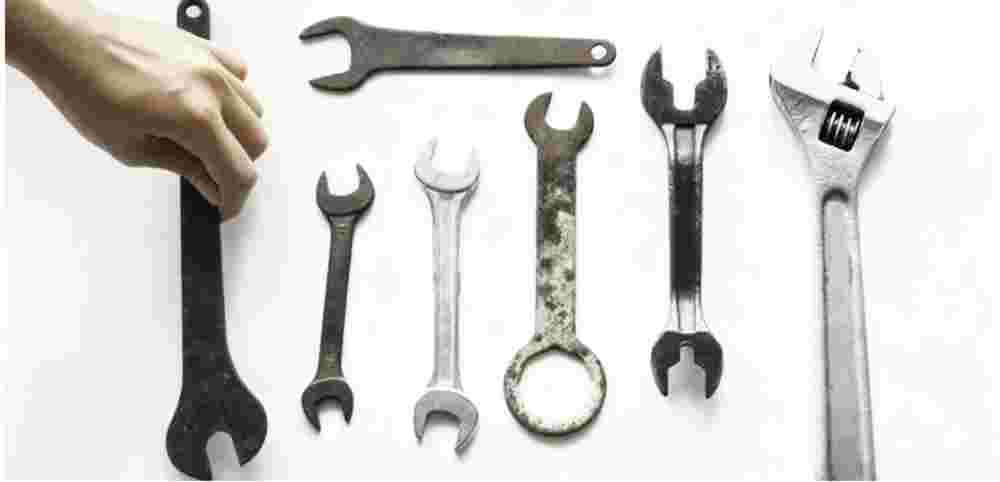
Have you ever had a cheap wrench shear off a bolt or a chisel tip shatter? Quality tools rely on induction hardening. Wrenches and sockets have their drive ends hardened to grip fasteners securely without deforming.
Chisels, punches, and pry bars contain hardened striking faces and tips that resist impact and avoid mushrooming or dulling.
This targeted hardening ensures the tool body remains tough and resilient while the critical contact points are super-hard, making them safer and longer-lasting for professionals and DIYers alike.
Aerospace & Defense
When failure is not an option, induction hardening delivers. Aircraft landing gear components, like axles, pins, and trunnions, experience extreme loads during takeoff and landing. Induction hardening provides the necessary fatigue strength and wear resistance in these critical steel parts.
Within jet engines, hardened shafts, gears, and fuel system components must perform flawlessly under high temperatures and stresses. The process’s precision and repeatability are paramount here, ensuring parts meet the rigorous safety and performance standards of the aerospace and defense sectors. It’s about enabling reliability where precision and performance are absolutely critical.
Across everyday vehicles and massive construction sites, from hand tools to aerospace systems, induction hardening actively strengthens vital steel parts for extended service life.
Conclusion
We’ve explored how induction hardening solves the critical challenge of creating incredibly hard, wear-resistant surfaces on steel parts while maintaining a tough, ductile core. This process uses electromagnetic energy for rapid, precise heating, followed by controlled quenching and essential tempering.
Its advantages are clear: unmatched speed, minimal distortion, pinpoint control over the hardened layer, and a clean operation. From the engine powering your car to the wrench in your toolbox and even high-flying aerospace components, induction hardening delivers the durability and reliability modern manufacturing demands.
Achieving consistent, high-quality results day after day requires robust and precise equipment. For reliable, efficient, and highly controllable induction hardening solutions, explore FOCO Induction‘s advanced hardening machines.
Built on proven electromagnetic technology, FOCO systems deliver the focused energy, precise process control, and automation readiness essential for mastering surface hardening—whether you’re processing crankshafts, gears, tools, or critical components. They provide the performance and reliability needed to meet demanding industrial standards.