Induction Hardening vs. Case Hardening—they seem similar at first glance. Many believe any surface hardening technique does the same job. However, this misconception can lead to costly mistakes. Choosing the wrong process might cause part failures or unexpected downtime.
Truth is, induction hardening and case hardening are fundamentally different technologies. Both aim for that “tough inside, hard outside” result. But here’s the catch: their methods and best uses are worlds apart.
Case hardening plays a chemistry game. It transforms the metal’s surface composition itself, like adding carbon to create a high-carbon steel skin on low-carbon parts—carburizing is the classic example.
Induction hardening relies on physical principles instead. It uses electromagnetic waves to heat only the surface super-fast, then quenches it. Crucially, it changes the microstructure (think martensite formation) without altering the chemistry.
So why does this matter? Picking the right technique affects everything: material choice, part durability, production speed, and cost. This guide cuts through the confusion. We’ll break down their core differences in plain terms, helping you make the perfect choice for your project. Let’s dive in!
Core Principles: Induction Hardening vs. Case Hardening
Initially, induction hardening and case hardening appear to achieve the same goal: creating wear-resistant surfaces while keeping the core tough. But fundamentally, they achieve this through entirely different scientific routes. One plays a chemical game, while the other relies on a thermal sprint. Understanding this core distinction is critical for selecting the right process for your component.
Case Hardening
Case hardening fundamentally changes the metal’s surface composition. Think of it as injecting new properties into the outer layer. The process typically introduces carbon or nitrogen atoms deep into the steel substrate through diffusion.
For example, during carburizing–the most common case hardening method—parts soak in a carbon-rich environment (like gas or solid compounds) at high temperatures around 900°C. Carbon atoms slowly move into the steel’s surface structure over several hours. This effectively converts the outer layer from low-carbon steel into high-carbon steel.
Therefore, the hardened “case” isn’t just a modified version of the original material; it’s a new alloy zone created chemically. The key takeaway? Case hardening alters the surface’s chemical identity.
Induction Hardening
In contrast, induction hardening quickly heats the metal without changing its chemical makeup. It relies on physics, not chemistry. Here’s how it works: an alternating electromagnetic field generated by a copper coil surrounds the part. This field induces electrical currents within the metal’s surface layer–like an invisible heater.
Within seconds, the targeted zone heats precisely above its critical temperature. Immediate quenching (using water or polymer spray) then rapidly cools this superheated layer. This swift thermal shock triggers a phase transformation in the existing steel structure, forming an ultra-hard microstructure called martensite.
Crucially, the steel’s original chemical composition remains unchanged throughout. Induction hardening rearranges existing atoms through precise heating and fast quenching, achieving a physical transformation.
Why the Core Distinction Matters
Ultimately, the fundamental difference boils down to chemistry versus microstructure. Case hardening adds new elements (like carbon/nitrogen), creating a surface layer with a different chemical makeup.
Induction hardening controls heating and quenching precisely, changing the surface’s grain structure while keeping its chemical composition intact. This key difference between chemical and physical methods affects all aspects—including suitable materials, production pace, and potential warping issues.
This core principle difference naturally dictates how each method is applied in practice. Next, let’s examine how their contrasting approaches translate into vastly different process workflows and practical realities on the shop floor.
Induction Hardening vs. Case Hardening: Process Comparison
The fundamental chemical-versus-thermal split between induction and case hardening directly dictates their real-world workflows. One process is a patient, all-encompassing bake, while the other is a rapid, targeted energy blast. Their step-by-step procedures highlight this contrast perfectly, affecting everything from cycle time to the scope of treatment.
Typical steps of case hardening
Case hardening is a slow and steady thermal process that treats the entire component. It begins with carburizing.
Here, we place the parts into a sealed furnace filled with a carbon-rich atmosphere (like natural gas). The furnace then heats to a high temperature, typically around 900°C, and holds this heat for several hours. This extended soak allows carbon atoms to slowly diffuse deep into the steel’s surface, creating a rich, high-carbon layer.
Next comes the quench. We rapidly cool the entire part in oil or another quenchant. This sudden cooling hardens the newly carbon-enriched case. However, this full-body quench introduces significant internal stresses.
Consequently, a final tempering stage is essential. We reheat the part to a relatively low temperature (e.g., 150-200°C) to relieve these stresses, restore some toughness, and prevent brittleness. This multi-stage process requires treating the whole component at once, with no partial options.
Typical steps of induction hardening
In stark contrast, induction hardening is a rapid, localized procedure. It starts with precision heating. Instead of a furnace, we use a water-cooled copper inductor coil that contours the part’s specific geometry.
When high-frequency AC flows through the coil, it creates a strong magnetic field. When we place the part inside the coil, this field induces electrical currents that heat only its surface—often in a matter of seconds.
We can precisely control the depth and pattern of this heat by adjusting the power and frequency. Immediately after reaching the desired temperature, we initiate quenching. Typically, integrated spray rings or quench blocks douse the heated zone with water or polymer solution, rapidly cooling it to form hard martensite.
Finally, tempering is almost always required next to reduce the brittleness of this hard, transformed surface layer and prevent grinding cracks.
In essence, case hardening treats entire components in batches through gradual carbon penetration. Induction hardening is a rapid, inline-capable process celebrated for its precise localization and speed. The choice between a long, holistic bake and a short, targeted blast has major implications for production volume, energy use, and part geometry.
These distinct process workflows naturally lead to different strengths and ideal applications. Next, we will break down these fundamental properties—from material needs to production speed—to clearly see which process fits which application.
Induction Hardening vs. Case Hardening: Key Characteristics Compared
Choosing between case hardening and induction hardening involves much more than just process preference. Their distinct core principles lead to a completely different set of technical characteristics. Understanding these key properties—from material needs to production speed—is essential for selecting the optimal method for any application. This comparison breaks down their fundamental differences across six critical areas.
Material Requirements
First, the base material itself dictates which process is even an option. Case hardening works best with low-carbon and low-carbon alloy steels like grades 1020 or 8620. These low-carbon steels feature soft surfaces lacking carbon, which easily take in additional carbon atoms when carburized.
Conversely, induction hardening requires a material that already contains sufficient carbon. It is the ideal choice for medium-to-high carbon steels and alloy steels like 1045 or 4140. Their existing carbon content allows the rapid thermal cycle to effectively form a hard martensite layer without any chemical alteration.
Learn about common materials for induction hardening.
Depth, Zone, and Distortion
The capabilities of each method diverge sharply when we look at hardening depth and precision.
Case hardening creates a relatively deep hardened case, typically ranging from 0.5mm to over 2.0mm. This makes it perfect for parts needing deep toughness to withstand heavy loads and repeated impact. However, this process usually treats the entire part, and the overall heating and quenching often result in relatively large distortion.
Induction hardening offers the opposite benefits. It provides a shallower layer, generally under 3.0 mm, but with extremely precise control. Its standout feature is selective hardening; we can accurately target a specific area like a single gear tooth or a crankshaft journal without affecting the rest of the part. Since only a small zone is heated, the resulting distortion is minimal.
Speed and Core Strengths
Production efficiency reveals another major divide. Case hardening is a slow process, with cycle times measured in hours. It is a batch-based method best suited for furnace processing large quantities of parts at once.
In contrast, induction hardening is incredibly fast, with heat cycles lasting mere seconds. This high speed makes it perfect for integration into an automated production line.
Consequently, their core advantages summarize their identities. Case hardening produces thick, durable surface layers ideal for components under extreme stress. Induction hardening wins with minimal distortion, high efficiency, and unparalleled localized treatment.
| Characteristic | Case Hardening | Induction Hardening |
|---|---|---|
| Material Requirement | Low-carbon or low-carbon alloy steel | Medium-to-high carbon or medium-carbon alloy steel |
| Case Depth | Relatively deep | Shallower, precise control |
| Treatment Area | Usually the entire part | Precise local areas |
| Distortion | Relatively high | Very low |
| Production Efficiency | Slow (hours), suitable for batch furnace processing | Extremely fast (seconds), suitable for in-line production |
| Core Advantage | Deep hardening, withstands heavy load & impact | Minimal distortion, high efficiency, localized hardening |
These distinct characteristics make each method the superior choice for specific real-world applications. Next, we will explore how these strengths translate into common uses across various industries, from automotive to heavy machinery.
Applications of Case Hardening and Induction Hardening
The theoretical differences between case hardening and induction hardening become crystal clear when we look at real-world applications. Each method has carved out its own niche, solving specific engineering challenges based on its unique strengths. Essentially, the choice often boils down to whether a part needs deep, all-over toughness or fast, localized hardness with minimal distortion.
Case Hardening
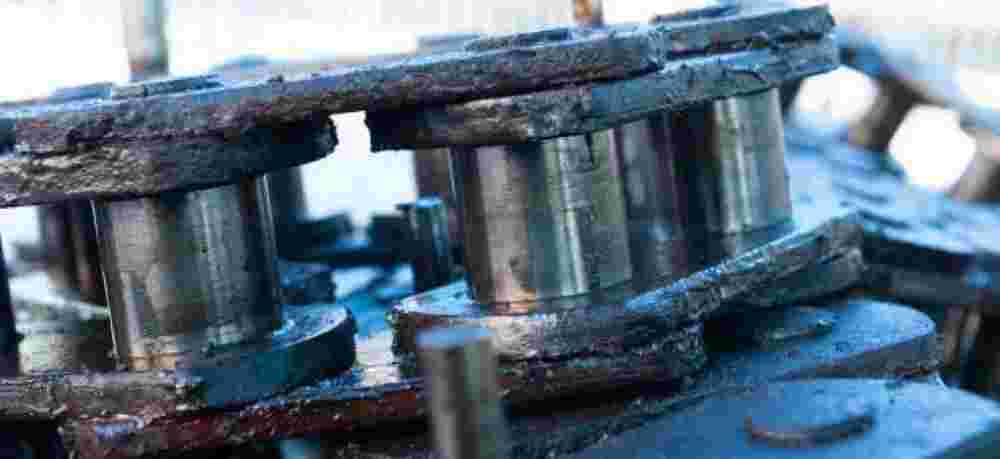
Case hardening is the go-to solution for components that must withstand tremendous forces, repeated impacts, and severe wear throughout their entire surface.
A prime example is gears. The entire tooth profile requires a deep, uniformly hardened case to resist the high bending stresses and contact fatigue encountered during operation.
Similarly, heavy-duty pins, shafts, and chain links benefit immensely from this process. These parts need a wear-resistant exterior while maintaining a shock-absorbing, ductile core to prevent sudden catastrophic failure.
Case hardening provides this perfect combination of a hard shell and a tough interior, making it indispensable in heavy machinery, drivetrains, and automotive transmissions.
Induction Hardening
Induction hardening performs best when the job requires exact control, fast processing, and little shape distortion. It is perfect for selectively hardening only the critical wear surfaces of a part.
For instance, on a crankshaft, only the journals (the bearing contact points) need extreme hardness. Induction hardening can target these exact spots, leaving the rest of the shaft soft and dimensionally stable.
This same principle applies to hydraulic piston rods and tool jaws, where achieving a very hard surface with almost zero distortion is mandatory for proper function and fit.
Furthermore, its localized nature makes it a powerful tool for repair and maintenance. A brilliant application is the single-tooth hardening of large gears. Instead of reprocessing an entire massive gear, technicians can use induction to precisely harden just one worn or damaged tooth, saving immense time and cost.
These distinct applications highlight how each process solves different problems. However, the final choice in any project often comes down to practical considerations of cost and production volume, which is our next critical point of comparison.
Conclusion
To conclude, examining both case hardening and induction hardening shows fundamental differences between them. At its core, case hardening is a chemical process that changes the surface composition of steel.
Meanwhile, induction hardening is a thermal-physical process that only alters the microstructure. This fundamental distinction drives all their differences—from material requirements and process speed to distortion levels and applications.
Ultimately, choosing between them is not about which one is better, but about what your design demands. Do you need deep, uniform hardening to withstand heavy impact and wear? Then case hardening, like carburizing, is your answer. Do you require rapid production, minimal distortion, or precise localized hardening? Then induction hardening is the clear choice.
Understanding this crucial difference forms the foundation for smart component design and effective failure analysis. We hope this guide offers a clear roadmap for your next project, empowering you to select the perfect process with confidence.