
Induction hardening vs. laser hardening vs. flame hardening are three key surface hardening techniques used across countless industries. So, what exactly are they? Fundamentally, surface hardening is a heat treatment process. It quickly heats just the outer layer of a metal part and then rapidly cools it.
Why do this? The result is a part with a significantly harder, more wear-resistant surface. Plus, it boasts improved fatigue strength. This is crucial: the part’s interior retains its toughness and ductility. This combination is perfect for parts constantly facing friction, stress, or impact–think gears, shafts, and rollers.
Now, each method–Induction, Laser, and Flame–uses a completely different heat source and approach. Consequently, they possess unique strengths, limitations, and ideal applications. Choosing the right technique is crucial.
Why? Because the right choice directly impacts your part’s final performance, production costs, and overall process efficiency. Making the right choice matters for optimizing your manufacturing outcomes. Understanding the core differences between these three workhorses of surface hardening is the essential first step in that decision-making dance.
Three Surface Hardening Technologies: A Detailed Comparison
Surface hardening refers to a category of heat treatment processes that greatly improve a metal component’s resistance to wear and fatigue. Among the various methods available, three stand out for their distinct principles and widespread industrial use: induction hardening, laser hardening, and flame hardening.
Each technique employs a unique heat source and offers a different set of advantages. The choice between them depends heavily on factors like production volume, part geometry, required hardness depth, and budget.
Understanding their core characteristics is the first step toward selecting the most efficient and cost-effective process for any application.
Induction Hardening
Induction hardening is a remarkably efficient and popular method, especially valued in high-volume manufacturing.
Basic principle:
Its operation is based on a fundamental principle of physics: electromagnetic induction. The process involves placing the component inside a copper coil, often called an inductor.
A high-frequency alternating current flows through this coil, creating a rapidly shifting magnetic field around the component. This field then induces swirling electrical currents, known as eddy currents, within the metal itself.
Thanks to the “skin effect,” these currents concentrate intensely on the surface of the part, generating heat quickly and precisely right where it’s needed. Immediately after heating, the part is quenched, typically with a spray of water or a polymer solution, to lock in the hardened structure.
See our induction hardening machine.
Key features of induction hardening:
This process boasts several key benefits.
- First, its speed is exceptional; it can heat a surface to the required temperature in a matter of seconds.
- Moreover, this method allows for precise adjustment of the hardening depth. Operators achieve this simply by adjusting the frequency of the electrical current. For instance, high frequencies (100–500 kHz) create shallow hardened depths of 0.5–2.5 mm, perfect for small parts. Meanwhile, medium frequencies (500–10,000 Hz) produce deeper layers of 2–10 mm, making them ideal for gears and shafts. For very large components, low frequency (50 Hz) can even achieve depths up to 10–20 mm.
- Another major advantage is minimal part distortion. Because heating is so localized, the core of the part remains cool and stable, preserving its shape and mechanical properties. Additionally, the process minimizes surface oxidation and decarburization.
Advantages and disadvantages of induction hardening:
Of course, induction hardening has its pros and cons. A key advantage is its high productivity, energy efficiency, and ability to deliver clean, uniform outcomes. It also integrates seamlessly into automated mass-production systems.
However, the required equipment involves a substantial upfront cost. Also, a significant consideration is the need for custom-designed inductors. Each unique part shape requires a specially engineered coil to ensure uniform heating, adding to the cost and setup time.
Applications of induction hardening:
You will typically find induction hardening used for hardening symmetrical, rotationally symmetric components. Its most common applications include gears, crankshafts, camshafts, and various pins and shafts.
Learn more about applications of induction hardening.
Laser Hardening
While induction hardening excels with symmetrical parts, laser hardening offers unparalleled precision and flexibility for complex geometries.
Basic principle:
This process utilizes a highly focused laser beam as its heat source. The laser beam moves across the workpiece surface, concentrating intense energy onto a highly focused spot. This causes the surface to heat up extremely rapidly, well above its transformation temperature.
The key difference here is the quenching method: after the laser passes, the heat dissipates so quickly into the cold bulk of the part that it self-quenches, eliminating the need for any external cooling spray.
Key features of laser hardening:
This technique has several defining characteristics.
- Its most celebrated advantage is its supreme precision. The laser can be accurately directed to harden only specific, intricate areas—like grooves, contoured surfaces, or small holes—without affecting the surrounding material.
- Consequently, the heat-affected zone is tiny, and part distortion is almost negligible, often removing the need for any post-process machining. It’s also an extremely clean process, as there are no quenchants involved.
- However, the hardened layer is generally shallower, typically between 0.3 mm and 2.0 mm, compared to induction hardening. On the other hand, the surface hardness achieved is often 1-3 HRC points higher due to the ultra-fast heating and cooling cycles.
Advantages and disadvantages of laser hardening:
The advantages and disadvantages are clear. The main benefits are extreme precision, minimal distortion, no environmental mess from quenchants, and great flexibility through simple programming.
The main disadvantage lies in the significant initial investment needed for laser hardening systems. Additionally, for optimal results, many materials require a pre-applied coating to absorb the laser energy effectively. Its ability to achieve very deep hardening depths is also limited.
Applications of laser hardening:
Laser hardening is particularly well-suited for complex and high-value components. Its typical applications include precision tools, molds, complex gears, and performing localized hardening on large parts like mill rolls or machine tool guides.
Flame Hardening
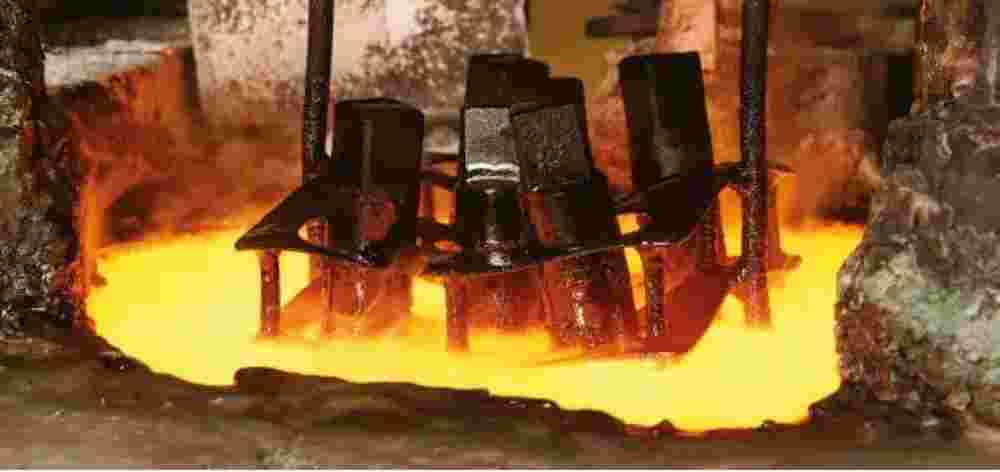
Flame hardening is the most traditional of the three methods, but it remains highly relevant for specific applications.
Basic principle:
Its principle is straightforward: it uses the intense heat from a combustion flame. Typically, an oxygen-fuel gas mix (like oxy-acetylene or oxy-propane) is burned at a torch nozzle, producing a flame that can reach temperatures around 3100°C. This flame is directed at the workpiece surface to heat it, followed immediately by a water quench.
Key features of flame hardening:
The characteristics of flame hardening are unique.
- Its biggest advantage is its simplicity and low cost. The equipment is relatively basic, portable, and requires a much smaller initial investment than the other methods.
- It is also capable of achieving very deep hardened layers, often in the range of 2-8 mm or even more.
- However, controlling the process consistently is a challenge. The heating uniformity depends greatly on the skill of the operator, making it easy to accidentally overheat areas or leave others underheated, leading to soft spots.
This manual dependency also results in lower productivity and introduces safety concerns due to the open flame and flammable gases.
Advantages and disadvantages of flame hardening:
The pros and cons are therefore balanced. The pros are low cost, equipment flexibility, and suitability for very large or immobile parts. The cons are inconsistent quality, high reliance on operator skill, risk of cracking or distortion, lower productivity, and inherent safety risks.
What are the advantages and disadvantages of induction hardening?
Applications of flame hardening:
Flame hardening finds its niche in large, heavy components that are difficult to move or heat by other means. It is commonly used for large gears, rolling mill rolls, the ways of machine tools, and large shafts.
Now that we understand how each process works, the crucial question is: how do you choose the right one for your specific project? The following guide will break down the key selection criteria to help you make an informed decision.
How to Choose a Hardening Method
Selecting the right surface hardening technology is a critical decision that directly impacts the performance, cost, and quality of your components. There’s no single “best” method; the ideal choice depends on a careful balance of several key factors related to your specific part, production needs, and budget. Let’s break down the main considerations to guide your decision.
1. Part Material
First, consider the part material. These three methods—induction, laser, and flame hardening—are typically applicable to carbon steels, alloy steels, and cast irons containing more than 0.4% carbon.
2. Part characteristics and requirements
- For size and weight, large, heavy components or those needing on-site treatment are good candidates for flame hardening. Smaller parts are better suited for induction or laser hardening.
- The geometry and complexity of the part are crucial. Laser hardening is ideal for components with complex geometries, fine details, or requiring pinpoint accuracy. In contrast, induction hardening is typically the preferred method for symmetrical parts such as shafts and gears.
- The required hardening depth is another key factor. For deep case depths (>3 mm), induction (using medium or low frequency) or flame hardening are preferred. For shallow, ultra-hard layers with minimal distortion, laser hardening is the superior choice.
- Finally, consider distortion tolerance. If you require absolutely minimal distortion and want to avoid post-machining, laser hardening is the clear winner.
How Does the Induction Hardening Process Increase the Hardness of Steel?
3. Production Volume and Efficiency
Your production volume and efficiency needs are also vital.
- Induction hardening dominates in high-volume manufacturing because of its exceptional automation capabilities and rapid processing rates.
- For multi-variety, small-batch production or R&D prototyping, the programming flexibility of laser hardening allows for quick changeovers.
- For one-off jobs, small batches, or occasional processing of large parts, the low equipment cost of flame hardening offers a significant advantage.
4. Cost Budget
Naturally, the cost budget plays a major role. If initial investment is a primary concern, flame hardening is the most affordable option, followed by standard induction equipment.
For those with a larger budget focused on long-term quality, automation, and flexibility, laser hardening or automated induction systems are the best investment.
5. Environmental and Safety Requirements
Finally, never overlook environmental and safety requirements. In clean, modern workshops with high safety standards, the non-polluting and flameless nature of laser and induction hardening makes them the preferred and safer choices.
To simplify your decision-making process:
- Large, heavy parts, low cost priority? → Think Flame Hardening.
- High volume, high efficiency, balanced cost? → Think Induction Hardening.
- High precision, complex shapes, minimal distortion?→ Think Laser Hardening.
For a clearer, direct comparison, the following table outlines the key characteristics of each method side-by-side.
| Comparison Dimension | Induction Hardening | Laser Hardening | Flame Hardening |
|---|---|---|---|
| Heat Source | Alternating Magnetic Field (Eddy Current) | High-Energy-Density Laser Beam | Oxy-Acetylene Flame |
| Hardening Depth | 0.5-20 mm (Highly Controllable) | 0.3-2.0 mm (Relatively Shallow) | 2-8 mm or deeper (Difficult to Control) |
| Distortion Control | Small Distortion | Minimal Distortion | Relatively Large, Overheating Risk |
| Precision & Control | High, Easy to Automate | Extreme, Precise Path & Area Control | Low, Relies on Operator Skill |
| Production Efficiency | High, Suitable for Mass Production | High, Good Flexibility | Low, Suitable for Single/Small Batch |
| Equipment Cost | Relatively High | Very High | Low |
| Operating Cost | Medium | Medium-High | Low |
| Process Flexibility | Requires Custom Inductors | High, No Special Tooling, Programmable | High, Adjust Flame Only |
| Environmental & Safety | Good | Excellent, Clean, No Pollution | Open Flame & Explosion Risk |
| Applicable Materials | Medium-Carbon Steel, Alloy Steel, etc | Medium-High Carbon Steel, Cast Iron, etc. | Medium-Carbon Steel, Alloy Steel, etc. |
This comparison highlights the core trade-offs between each technology. The ongoing evolution in manufacturing drives continuous improvement in these hardening technologies. Looking ahead, we will explore the emerging trends and future prospects that are shaping the next generation of surface hardening technologies.
Technology Trends and Future Outlook of Surface Hardening Methods
The field of surface hardening is continuously advancing, driven by demands for greater precision, intelligence, and environmental sustainability. Key trends are shaping the future of induction, laser, and flame hardening processes.
Laser hardening is becoming increasingly smart and integrated. The combination of numerical simulation and computer control is paving the way for fully automated production.
Modern systems now incorporate AI and IoT technologies—for example, using infrared sensors to monitor temperature in real-time and adjust power accordingly.
Smart algorithms can identify part geometry and generate optimal scanning paths, reducing setup time. Additionally, digital twin simulations allow for process optimization before physical hardening begins.
Induction hardening is also evolving toward higher flexibility and automation. Advances in power supply and sensor technology enable more responsive systems. These improvements support faster changeovers and better adaptability to mixed-volume production, reducing the need for custom inductors.
Furthermore, environmental concerns are pushing all methods toward greener practices. Laser hardening, in particular, is recognized as an eco-friendly option—it requires no quenchants and consumes less energy. EU recommendations already list it as a Best Available Technology (BAT).
Finally, the combination of different hardening methods or supplementary treatments is gaining interest. Hybrid processes can enhance surface properties and open new applications across high-tech industries.
Conclusion
In summary, induction, laser, and flame hardening each offer unique strengths, making them valuable tools in surface hardening. Flame hardening continues to be the go-to solution for large components and field repairs, thanks to its straightforward setup and affordability.
Induction hardening, such as the advanced systems offered by FOCO Induction, excels in high-volume production with its efficiency and controllability, making it ideal for automotive and general manufacturing.