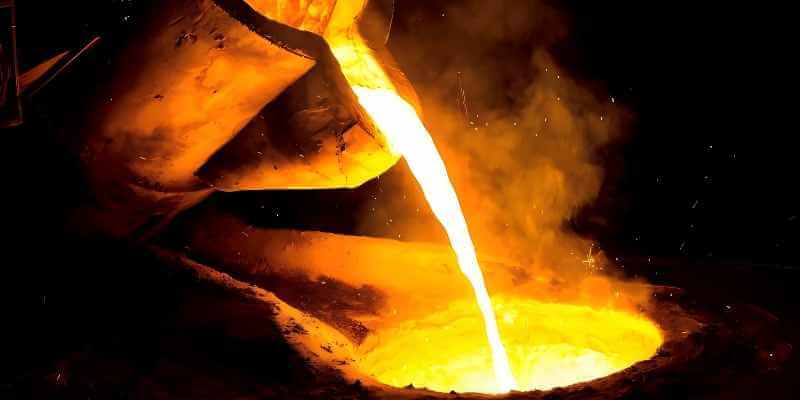
Copper melting is a key process in metalworking, but it often faces challenges that impact quality and efficiency. Common problems and solutions in copper melting covers major issues like impurities, temperature control, and crucible wear. These problems can lower conductivity, cause defects, or waste materials.
However, proper techniques and tools can solve them. For example, flux removes oxides, while induction furnaces ensure even heating. Additionally, preventive measures like preheating crucibles extend their lifespan.
This guide simplifies complex concepts for easy understanding. Whether you’re a beginner or expert, it offers practical tips to improve your copper melting process. Stay tuned for detailed solutions in the next sections
Common Problems When Melting Copper
Melting copper might seem straightforward, but several challenges can arise during the process. From impurities to temperature control and equipment wear, each issue affects the final product’s quality. Let’s break down these problems so that we can better solve them later.
Impurity in Molten Copper
- Oxide Contamination
Oxide contamination becomes a major headache when temperatures exceed 800°C. At this point, copper reacts aggressively with oxygen, forming layers of cuprous oxide (Cu₂O) and cupric oxide (CuO).
These oxides don’t just sit on the surface—they reduce conductivity by 10-15% and slash ductility by 30-50%. Worse, they create slag inclusions during casting, leading to weak spots in the final product.
- Sulfur/Iron Contamination
Sulfur and iron contamination often sneak in through recycled materials or low-grade fuels. Sulfur bonds with copper to form brittle Cu₂S phases, while iron impurities above 0.1% drastically drop electrical conductivity. These contaminants are particularly problematic in electrical applications where purity is critical.
- Hydrogen Embrittlement
Then there’s hydrogen embrittlement, a silent saboteur. Moisture in raw materials or organic residues decomposes at high temperatures, releasing hydrogen that dissolves into the molten copper.
When the metal solidifies, this hydrogen forms tiny bubbles—0.1-2 mm pores inside castings. These defects weaken the structure and can cause surface blistering during later hot rolling.
Click to learn more about Controlling the Cleanliness of the Molten Copper.
Temperature Problems in Copper Melting
- Overheating Risk
Overheating risks depend on the alloy. Pure copper starts oxidizing rapidly above 1,150°C, losing 1-3% of its mass to oxidation every hour.
Brass, on the other hand, faces zinc volatilization at just 950°C, altering its composition and properties. The higher the temperature, the thicker the oxide layer—up to 0.2 mm per hour at 1,100°C—which means more scrap and lower yields.
- Uneven Heating
Uneven heating is another common issue. In large crucibles, temperature differences of 200°C between the center and edges can create “cold spots.”
These areas cause inconsistent fluidity during pouring, leading to segregation in alloys and flawed castings. Without proper stirring or temperature monitoring, the melt’s quality becomes unpredictable.
Crucible Loss in Copper Melting
- Crucible Erosion
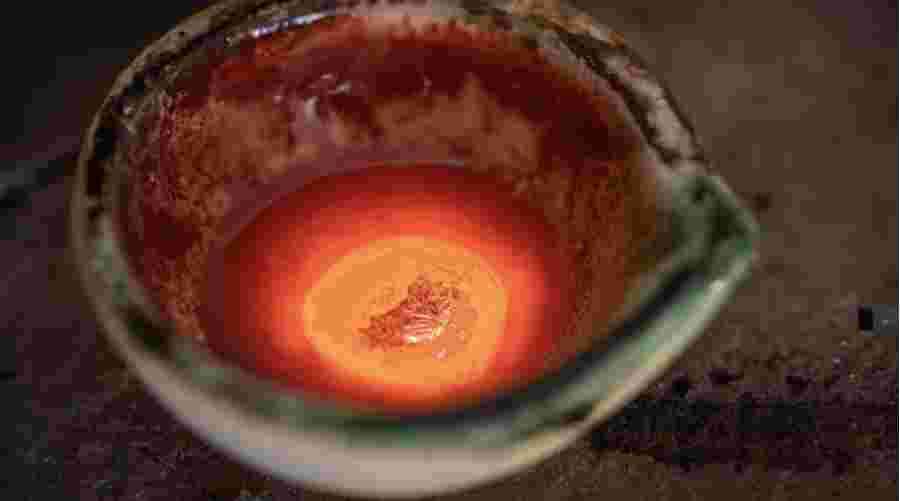
Crucible erosion happens because molten copper is relentless. It seeps into graphite grain boundaries, and zirconia coatings break down under prolonged heat. Add electromagnetic stirring or rough handling during charging, and the crucible’s lifespan drops fast.
Over time, this wear introduces impurities like carbon or silicon into the melt, further degrading quality.
- Thermal Shock Damage
Thermal shock damage is equally destructive. When molten copper at 1,100°C abruptly contacts a cold crucible, microscopic fractures immediately develop throughout the material.
These tiny 0.1–0.5 mm cracks grow with each heating cycle until they penetrate the entire structure. Intermittent production worsens the problem, as repeated cooling and heating cycles accelerate fatigue.
Porosity Formation in Molten Copper
- Hydrogen Sources
Hydrogen sources are everywhere. Surface moisture on raw materials evaporates at 100°C, but crystalline water locked in compounds needs over 300°C to break free.
Oils, grease, or plastic residues carbonize and release hydrogen gas, which gets trapped in the solidifying metal. The result? Macro-pores (>1 mm) visible to the naked eye or micro-pores (10-100 μm) detectable under a microscope.
- Pore Characteristics
Pore distribution follows a pattern—they cluster near the top of castings and the centers of thick sections. That’s where cooling is slowest, giving hydrogen time to gather and form bubbles. These voids weaken mechanical strength and ruin surface finishes, making the product unfit for precision applications.
While these challenges may seem daunting, the good news is that most can be prevented or minimized with the right techniques. Now that we’ve identified the key issues in copper melting, let’s explore practical solutions—from refining temperature control to optimizing crucible maintenance—that can help you achieve cleaner, more efficient melts.
How to Solve Problems in Copper Melting
Melting copper efficiently while maintaining high quality requires addressing several key challenges. From impurity control to temperature management, each step impacts the final product. Let’s explore practical solutions to common copper melting problems.
Copper Melting Impurity Management
Flux application plays a crucial role in reducing oxides and other contaminants. Borax works best at 900-1,000°C, cutting oxide content by 50-70% when added at 0.3-0.8% of the melt weight. For deeper deoxidation, phosphor-copper alloys (15% phosphorus) are highly effective—just 0.02-0.05% addition removes oxygen without leaving excessive residual phosphorus.
Electromagnetic stirring takes purification further. By applying 3-5 kW of power per ton of copper and alternating stirring directions, this method boosts impurity floatation by 40% and ensures 98% alloy uniformity. The swirling motion pushes inclusions to the surface while preventing segregation in the melt.
For ultra-high-purity copper, vacuum induction melting excels. Operating at 10⁻²–10⁻³ Pa with graphite heating elements, this method slashes oxygen levels below 5 ppm and improves conductivity by 3-5%. It’s ideal for oxygen-free copper used in electronics and aerospace applications.
Precision Temperature Control in Copper Melting
Modern induction furnaces achieve exceptional temperature control through PID-regulated heating, maintaining ±3°C stability during operation. Their 20°C/min preheating rate balances speed with safety, preventing thermal shock while efficiently reaching working temperatures. This precision is crucial for brass alloys, where exceeding 950°C risks zinc loss through volatilization.
Infrared thermography enhances monitoring by providing full-surface temperature mapping without contact. These systems detect crucible hotspots indicating refractory wear and reveal solidification patterns during casting.
Advanced versions integrate directly with furnace controls, enabling real-time adjustments to maintain optimal melt conditions. The combination of precise induction heating and comprehensive thermal imaging significantly improves process consistency and product quality.
Together, precision induction heating and infrared monitoring form a complete temperature control solution. The induction system handles the overall heating requirements, while the infrared technology tracks smaller temperature variations.
This dual approach ensures optimal conditions for high-quality copper melting at both macro and micro scales. It ensures consistent melt conditions from the first heat through continuous production runs, significantly reducing scrap rates and improving final product consistency.
Crucible Protection Measures
Selecting the optimal crucible material is the first line of defense against premature failure. Advanced composite designs featuring a 0.5-1 mm zirconia (ZrO₂) inner lining bonded to a high-density graphite matrix offer exceptional durability.
These engineered materials combine zirconia’s chemical resistance with graphite’s thermal conductivity, achieving 50-80 heating cycles compared to just 15-20 for standard graphite crucibles. The zirconia layer specifically prevents molten copper penetration at grain boundaries—a common failure mode in pure graphite crucibles.
Proper preheating procedures are equally critical for crucible longevity. Heat gradually: 150°C/h to 600°C, then 300°C/h to operating temp. Soak 1-2 h (small crucibles) or 3-4 h (large ones). This controlled heating process prevents the formation of microcracks that develop when cold crucibles encounter molten metal.
These combined material and procedural approaches can extend crucible service life by 3-4 times while reducing contamination risks from crucible degradation. The initial investment in quality crucibles and proper heating equipment pays dividends through reduced downtime and more consistent melt quality over time.
See FOCO Induction furnaces application—Induction Melting Copper With a Mini Furnace.
Porosity Prevention Strategies
Raw material preparation eliminates gas sources. Drying scrap at 120-150°C for 4-8 hours reduces moisture below 0.05%, while alkaline degreasing and sandblasting remove oils and oxides.
Gas shielding creates a protective atmosphere. High-purity argon (≥99.99%) flowing at 5-10 L/min forms a 30-50 mm barrier against air. For added protection, some foundries layer CO₂ at the crucible bottom to block hydrogen absorption, with argon covering the top.
By implementing these methods, you’ll produce cleaner, more consistent copper melts with fewer defects and lower operating costs. Whether you’re casting plumbing components or aerospace alloys, these solutions will elevate your results.
While these fundamental techniques address most copper melting challenges, induction melting presents some unique considerations that require special attention.
The electromagnetic effects and rapid heating characteristics of induction systems create both opportunities and challenges that conventional melting methods don’t encounter. Let’s examine these special issues in induction melting of copper, focusing on how to leverage the advantages while mitigating potential problems.
Special Issues in Induction Melting Copper
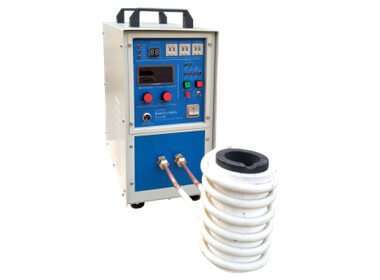
Induction melting of copper holds a critical position in industrial production due to its unique physical properties and process advantages. Compared to traditional melting methods, induction melting is particularly well-suited for copper and its alloys, primarily owing to three core strengths:
First, exceptional energy efficiency. Copper has excellent electrical conductivity. This allows over 95% energy conversion efficiency in alternating magnetic fields. Compared to gas-fired furnaces, induction melting is 30-50% more energy-efficient. This makes it particularly suitable for continuous production operations.
Second, precise purity control. The contactless heating process prevents fuel contamination. When used with vacuum or protective gas atmospheres, this method achieves exceptional purity.
The resulting copper maintains oxygen levels under 10 ppm, meeting the rigorous specifications required for electronic-grade copper materials.
Most importantly, outstanding process flexibility. Frequency adjustment enables precise control of electromagnetic stirring intensity, which occurs directly within the molten pool. Such control proves essential for specialized copper alloys. Specifically, it ensures proper homogenization of beryllium copper and chromium zirconium copper alloys.
However, realizing these advantages requires overcoming technical challenges unique to copper. The following sections will provide a detailed analysis of five key technical aspects and their solutions in induction melting copper.
Electromagnetic Stirring Effects
The intense electromagnetic fields in induction melting create powerful stirring forces that can become excessive for copper. At standard 20-30 Hz operating frequencies, molten copper develops turbulent flows reaching velocities of 0.5-1.2 m/s.
While beneficial for mixing, this risks accelerating crucible erosion—particularly at the slag line, where mechanical wear combines with chemical attack. Optimal control requires balancing stirring intensity (typically 3-5 kW/ton) with crucible protection.
Recent solutions include intermittent stirring cycles (30 seconds on/15 seconds off) and frequency modulation between 15 and 25 Hz to maintain homogeneity while reducing wear. Advanced systems now incorporate real-time viscosity monitoring to automatically adjust stirring parameters based on actual melt conditions.
Skin Effect Challenges
Copper’s high conductivity creates extreme skin effect—at 1 kHz, current penetration is just 2.1 mm versus 7 mm in steel. This causes severe temperature gradients in larger charges, with surface temperatures reaching 1150°C while core remains below 900°C.
For ingots over 150 mm in diameter, multi-frequency approaches prove essential: initial high-frequency (3-10 kHz) heating for rapid startup, switching to medium-frequency (150-400 Hz) for bulk heating.
Modern inverters now feature automatic frequency sweeping that continuously adjusts from 10 kHz to Hz throughout the heating cycle, achieving ±15°C uniformity in 200 mm billets. Water-cooled flux concentrators can further improve penetration depth by 30-40%.
Cold Material Issues
The combination of skin effect and natural convection creates persistent cold zones at crucible bottoms—often 100-150°C cooler than upper regions. This “cold heel” phenomenon causes alloy segregation and incomplete melting. Solutions include:
- Layered charging (placing higher-melting-point alloys at bottom)
- Controlled inversion cycles (tilting furnace 45°every 15 minutes)
- Bottom-up power delivery systems (using inverted coil designs)
Advanced monitoring using array thermocouples now allows maintaining axial temperature gradients below 50°C/cm, critical for premium conductor production.
Some operations employ sacrificial copper “starters”—high-purity plugs that initiate melting from the bottom up.
Power Supply Matching
The low resistivity of copper necessitates specialized power supply design considerations. For copper melting applications, the medium frequency range typically delivers optimal performance, though it requires 20-30% higher operating voltage compared to steel melting. This process also demands power factor correction capacitors with current ratings 2-3 times greater than standard applications.
Modern IGBT power supplies now feature special “copper melting modes.” These modes automatically adjust key parameters. First, they regulate DC bus voltage between 650 and 850 V. Second, they optimize phase angles for better power compensation. Third, they use soft-start sequences to avoid current spikes.
The latest 12-pulse rectifier designs achieve impressive efficiencies of 92-95%, even under the challenging power factor conditions inherent to copper melting. These advancements significantly enhance energy efficiency and system stability in copper melting processes.
Safety Considerations
Induction melting of copper presents unique safety challenges that require special precautions. The process generates strong electromagnetic forces that can cause molten metal to splash unexpectedly. Power interruptions are particularly dangerous as they may lead to rapid cooling and equipment damage. Some copper alloys also release toxic fumes when heated.
Modern melting systems address these risks with multiple safety features:
- Electromagnetic stabilizers reduce metal splashing
- Backup inert gas systems protect against oxidation during power failures
- Reinforced containment vessels withstand extreme pressures
Advanced systems now include:
- Real-time monitoring with optical sensors
- Automatic power reduction if irregularities are detected
- Rapid-emergency discharge mechanisms capable of complete furnace evacuation within seconds
These comprehensive safety measures help prevent accidents while maintaining efficient operation.
Conclusion
This guide systematically addresses key technical challenges in copper melting, offering comprehensive solutions from theory to practice. Operators should selectively implement the most suitable techniques based on production conditions while staying updated on industry advancements.
For superior induction melting performance, FOCO Induction furnaces deliver precision temperature control, optimized stirring effects, and industry-leading energy efficiency—making them the ideal choice for high-quality copper production.